Fuel v energy…  What exactly are ketones & where do they come from?

Questions like this are never easy to answer. The explanations involve a lot of long, confusing words, which then themselves require definition. As I have no medical or dietary training; all I can do is try and present the results of my own reading in as clear and jargon-free way as possible. If readers’ comments can help guide my understanding, then all feedback will be gratefully received!

The below represents my own explanation of the process. I hope it helps fill in a few gaps; for what can be a tricky thing to get your head around!

We’ve already touched on the metabolic state of ‘ketosis’ in an earlier blog. But what exactly are ketones? If they promise so much, we ought at least to understand a little about them.

As we’ve seen, ketosis is a state where the body’s energy-supply comes from ‘ketone-bodies’ in the blood. This is in direct contrast to a carb-fuelled metabolism, where energy is provided by glucose. That state is termed ‘glycolysis’.

So ketone-bodies are what we burn in ketosis; but where do they come from?

In order to produce ketone-bodies, the liver’s stores of glycogen must be depleted. This is achieved through restricting your intake of dietary carbohydrate.

Glycogen is the energy-source which the body creates from glucose in the food we eat. To understand the difference between glucose and glycogen, just think of an old-fashioned coal power-station.

Coal is burnt to produce heat. That heat turns a generator, which then generates electricity. It’s the electricity which powers our homes, not the coal itself. Think of glucose as the coal (our fuel). The body converts it to glycogen, which represents the electricity (our energy). It’s the glycogen which actually powers our muscles and organs; glucose is the fuel which we process to produce that energy.

So, we restrict our glucose-intake. The body then can’t produce glycogen, which has hitherto been our primary source of energy. Our bodies then face two choices. We can either die, or we can find another source of energy to replace the glycogen. This is what ketone-bodies are; the alternate source of energy our bodies manufacture when they can’t produce glycogen.

The name for the body’s production of ketone-bodies is ‘ketogenesis’. But how does the body produce them?

Ketones are produced primarily in the mitochondria of liver cells. Mitochondria are the parts of cells which generate the energy required for those cells to work. In our power-station, mitochondria represent the generator which turns the fuel into energy.

If glucose is required to make the energy-form glycogen; what is the body’s fuel-source which enables us to produce ketone-bodies? The answer is fatty-acids.

The term ‘ketone-bodies’ may be misleading. ‘Bodies’ implies that they’re solid. In fact, they’re water-soluble. When fatty-acids are broken down for energy, they produce ketone-bodies which can then power the brain and muscles.

These ketone-bodies come in three forms:

  • Acetone (the word ‘ketone’ actually derives from the old Germanic Aketon, meaning acetone)
  • Acetoacetic acid
  • Beta-hydroxybutyric acid (sources state this isn’t strictly a ketone, but it does the same thing, so I include it here).

It’s interesting to note that two forms of ketone-bodies are acidic. If levels of these become too high, the body enters a state of ketoacidosis. This is the poisonous ‘acidic’ state that type 1 diabetics enter when their bodies cease to produce the insulin required to process glucose from the food they’re eating.

Because the body can’t produce energy from that glucose, ketosis occurs which burns stored body-fat. When this is depleted, the body moves onto muscle-tissue in its desperate quest for energy. At this stage, ketosis turns into ketoacidosis. Un-metabolised glucose continues to build up in the blood, which then literally becomes poisonous. The results can be fatal if left untreated.

So if ketone-bodies are produced from fatty-acids, where do the fatty-acids come from?

Fatty acids can come from the food we eat, or from the body’s stored fat-reserves (body-fat). This is why you lose so much weight on a ketogenic-diet. Your body literally turns into a fat-burning machine, fuelled by the ready source of body-fat most of us have built up through excessive consumption of carbohydrate.

This makes ketosis an incredibly efficient source of energy. The body’s fat-stores are a huge fuel-tank, just waiting to be tapped. Because fatty-acids are also present in the food we eat, it’s practically impossible for that fuel-tank to run empty. This is why many athletes are turning to a ketogenic-diet: they don’t suffer the roller-coaster of energy peaks & troughs which result from burning glucose as fuel (more in that in another post).

So that’s a short explanation of where ketones come from, and how our body produces them. My brain has burned a fair few ketones, in trying to understand this process; so enough for now!

I hope you find this helpful and informative in trying to decipher the jargon.

Thanks for reading,

Adam.
Magical mushrooms. The field of dreams…

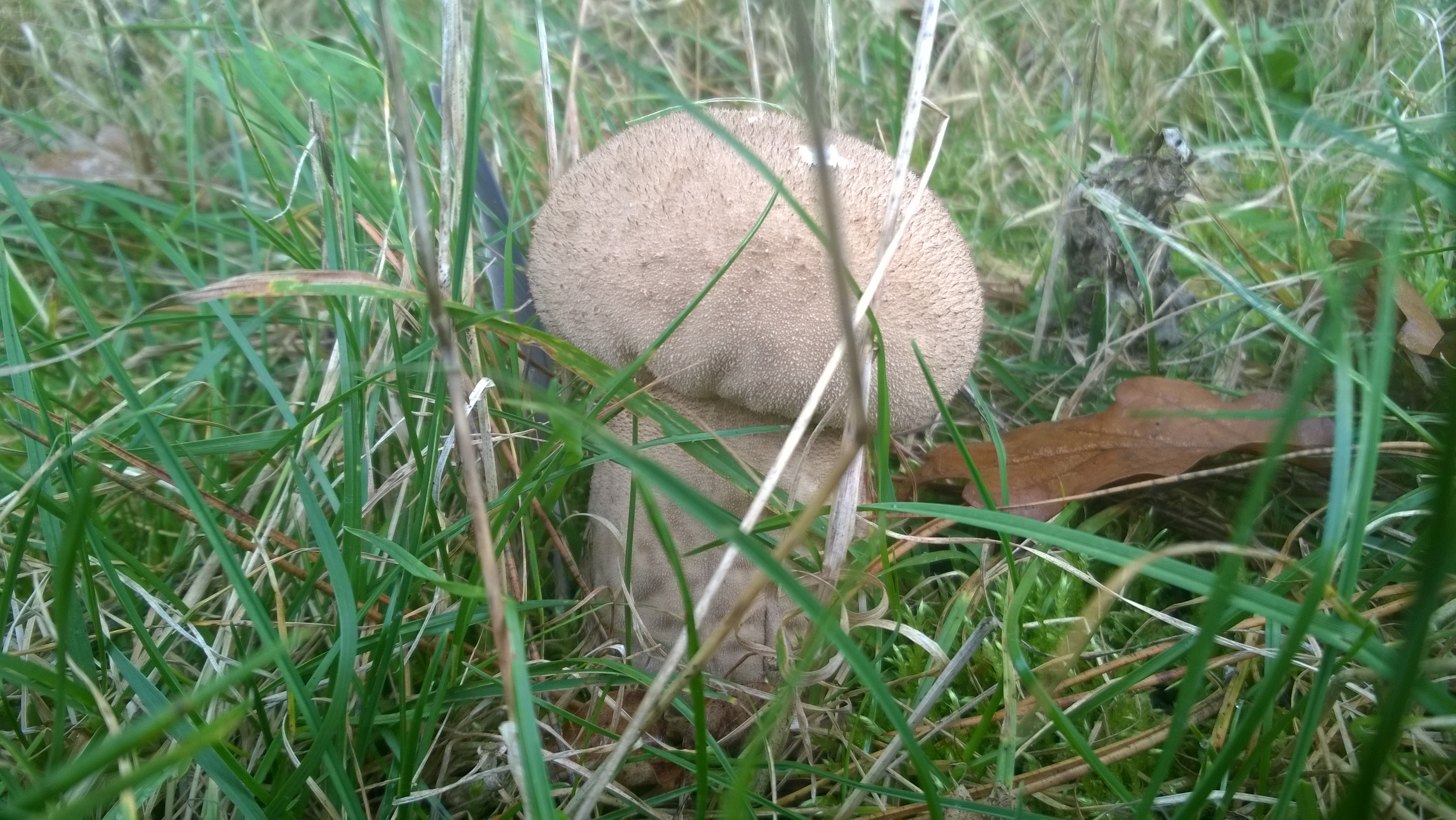
In the autumn months, the rich fruitful bounty of the English fields and hedgerows gives rise to an entirely different fruit. Fungi!

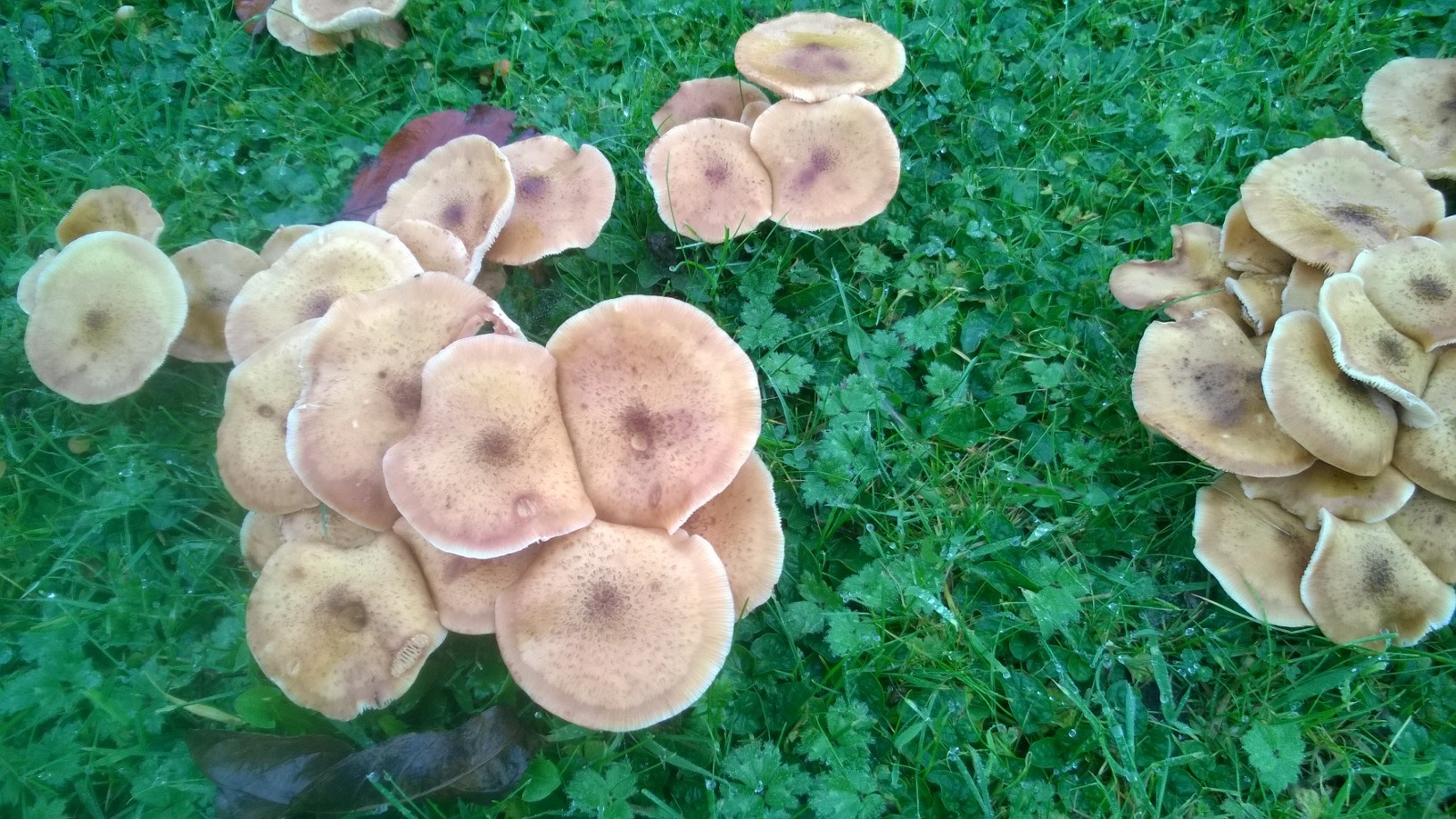
There is one field I pass on my morning walks, which is truly a field of dreams. From out the pasture emerges a carpet of strange, phosphorescent, magical mushrooms. They glow ethereally in the half-light of early dawn; like an army of silent, fallen angels. As the daylight encroaches, they give up their glow and the magic is slowly lost.

The breadth of mushrooms at this time of year is astounding. Some of them even look like bizarre flowers. The ‘good’, the ‘bad’ and the ‘ugly’ doesn’t really do them justice. They all seem to be pretty ugly, and I’m certain that a fair percentage would prove quite ‘bad’ if you were to attempt to eat them. I just look therefore; and quietly gawp at the rich variety of nature’s harvest.

Thanks for reading and enjoy the day!

Adam.

WP_20141019_012

mush 2

mush 3

mush 4

mush 1

Classic Caesar Dressing – the perfect accompaniment to low-carb salads. Chicken, ham, prawns… The choice is endless. LCHF & diabetic-friendly.

caesar 2

You know you have good friends when they invite you to a LCHF, diabetic-friendly meal!

Last night, we were invited to a friend’s house for dinner. The food she cooked was sublime! Prawns marinated in ginger, garlic, chilli & dill, atop a classic Caesar salad-style base. Thrown into the mix was griddled pancetta, tomatoes, olives & parmesan. I couldn’t have done better myself!

Caesar dressing is a low-carb staple! Not only does it taste wonderful; it’s also truly versatile. You can use it on pretty much any salad, be it meat, cheese, fish or fowl.

I’ve always been a bit of a purist with food. When I say that, I don’t mean that I stick blindly to the classics; I refer principally to the quality of ingredients used and the attention to detail of their preparation. A Caesar salad dressing therefore doesn’t belong solely with cos lettuce, and croutons. Try it with soft autumn ‘buttery’ leaved salads and stir it into steamed peas or broccoli. The results won’t disappoint.

There’s no impact to blood-sugar and it’s incredibly easy to make. I tend to make a ‘batch’, which lives in the fridge for up to a week. Experience shows however, that it never lasts that long. We eat it within three days every time!

In a small food processor, whizz up a couple of anchovies and half a clove of garlic. The flavour of the garlic intensifies over time, so if you’re not going to eat all the dressing straight away, it’s best to err on the side of restraint. Add to this a small squeeze of lemon juice, a small handful of grated parmesan cheese, half a cup of good olive oil and half a cup of double cream. You can also add an egg yolk if you like, but bear in mind that raw egg will shorten the shelf-life. Give these a good blitz in the processor until smooth and emulsified, then taste to adjust the seasoning if required.

Voila! Incredibly simple and sublimely delicious.

Thanks for reading and bon ap!

Adam.

Missed opportunities…

My mother always said I was never very quick off the mark… Well that definitely applies to my photographic skills!

On so many of my morning walks, I’m just too slow in reaching for the camera. I’ve missed deer, owls, birds of prey, badgers, foxes, fighting pheasants and (of course) the cat doing any number of ludicrous things!

Well this morning, my missed photo opportunity was a huge heron. It launched itself from the cover of the reeds, and sailed awkwardly yet majestically right over my head. Its long neck, sharp beak, huge wingspan and great hanging feet made it look just like a pterodactyl. This is supported by how slow they move. It’s not hard to see that birds are directly related to dinosaurs sometimes. This one looked like something straight out of the history books. And I was just too slow in reaching for the camera…

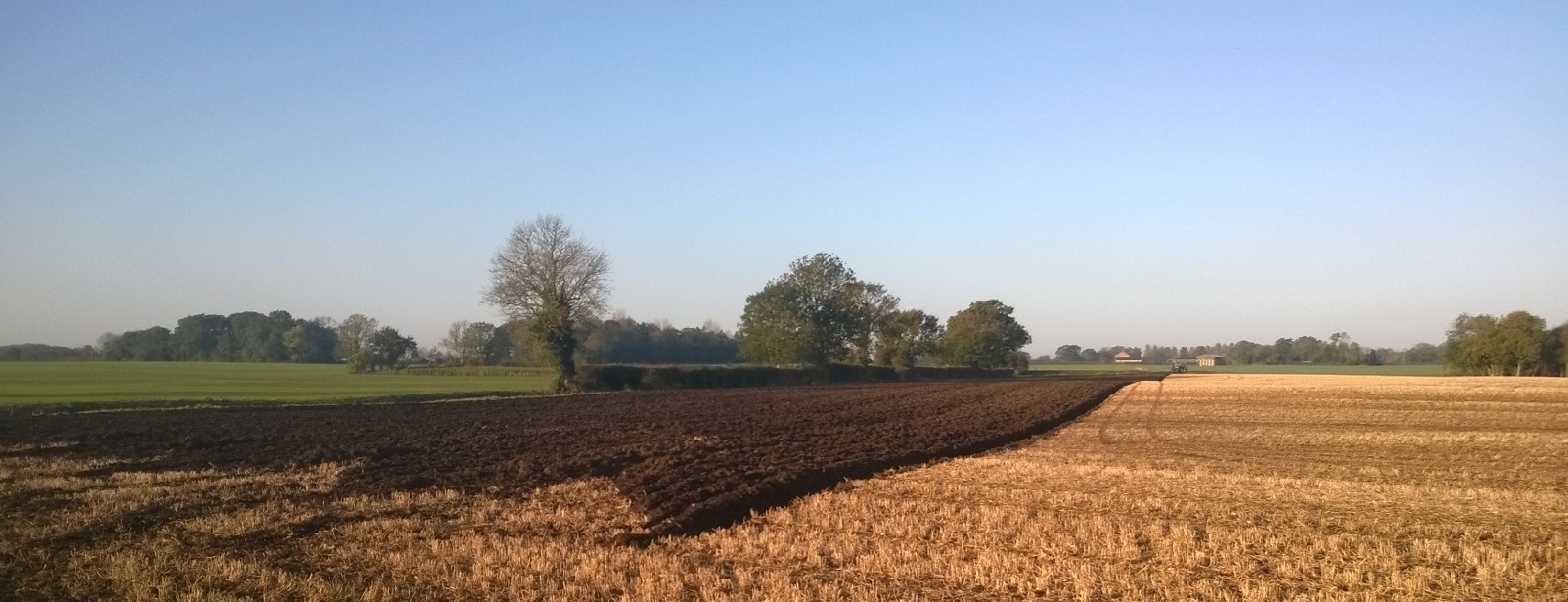
Nevertheless, in spite of these missed opportunities; it’s another perfect day in ketosis!

Take a look for yourself…

day

plough

Thanks for reading and have a great day!

Adam.

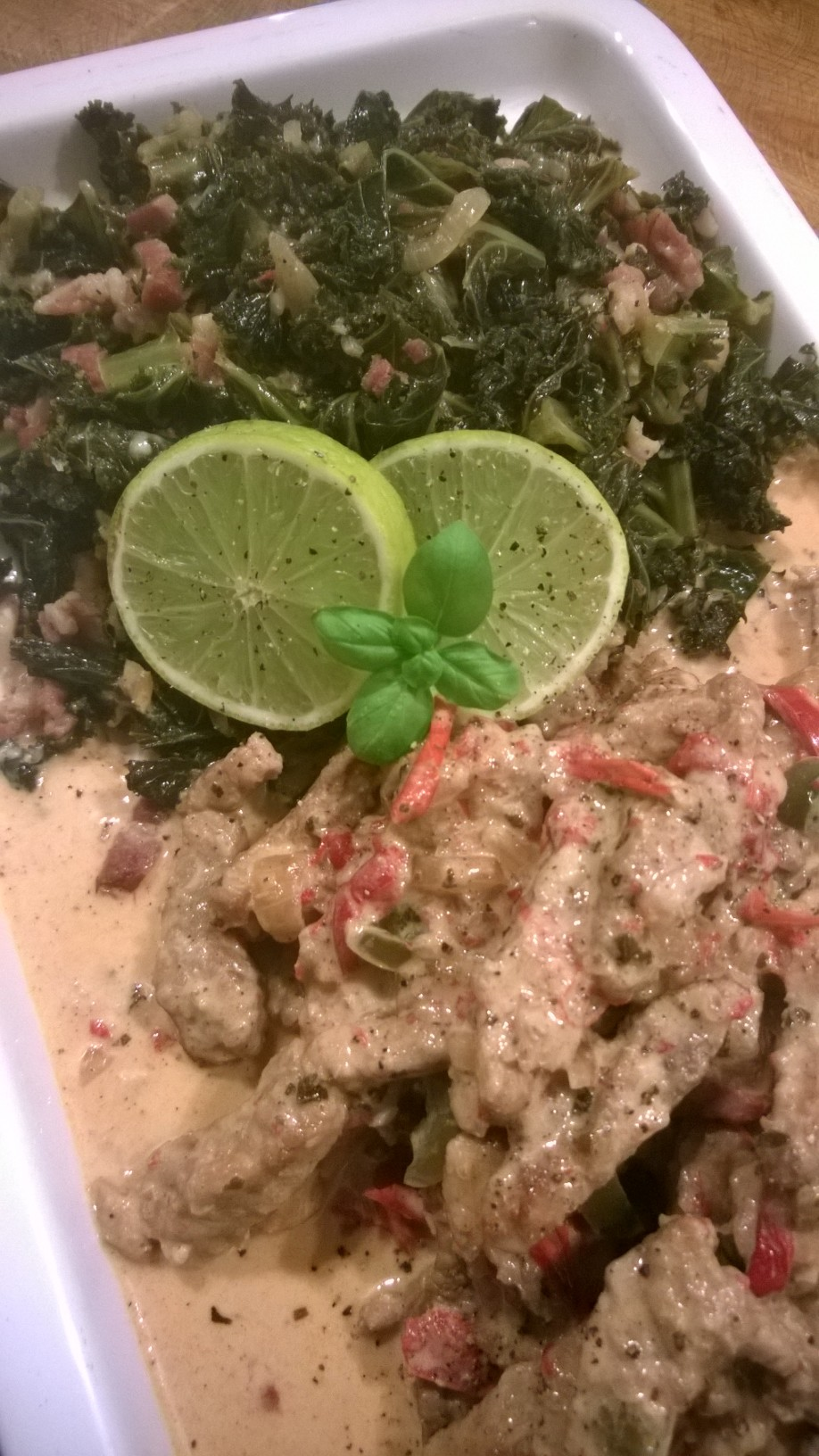
Pork Stroganov with Buttered Grana Padano Kale – comfort food with a difference: no carbs! Rich, creamy & satisfying. Diabetic-friendly & a keto-winner!

pork strog

As those Autumn nights begin to kick in, this dish is just what the doctor ordered. The warmth of smoked paprika, the saltiness of grana padano & the smoothness of cream all provide the perfect counterpoint to one-another. This is certainly the type of dish to enjoy on the sofa from a bowl. Light the fire and think of bobble-hats & bonfires. Then have seconds! After all, it’s low carb…

In a thick-bottomed pan, brown some smoked bacon / lardons. Add chopped onion and garlic and cook until the onion is soft. Add your kale, a little water and season thoroughly. Place the lid on the pan and cook on a low heat for at least half an hour until the kale loses its toughness.

In another pan, melt butter and a little bit of oil, then add your pork. Seal until golden brown, trying not to turn the meat until it’s done (if you do, you stop it from caramelising and risk making it steam, not fry). Once browned, add onion, peppers and garlic, then a generous shake of paprika. Stir in a stock cube and cook until it starts to cry out for moisture. At this point, de-glaze with a little vodka.

Top the pan up with water, so that the contents are up to their necks in liquid. No more. Reduce to a third of its volume then stir in your cream. Adjust for seasoning and sprinkle on some herbs. Lift the lid on the kale and stir in your grated grana padano & butter. Scoop stroganov and greens into a large chunky bowl & enjoy. Low carb doesn’t get much better than this!

Thank you for reading and bon ap!

Adam.

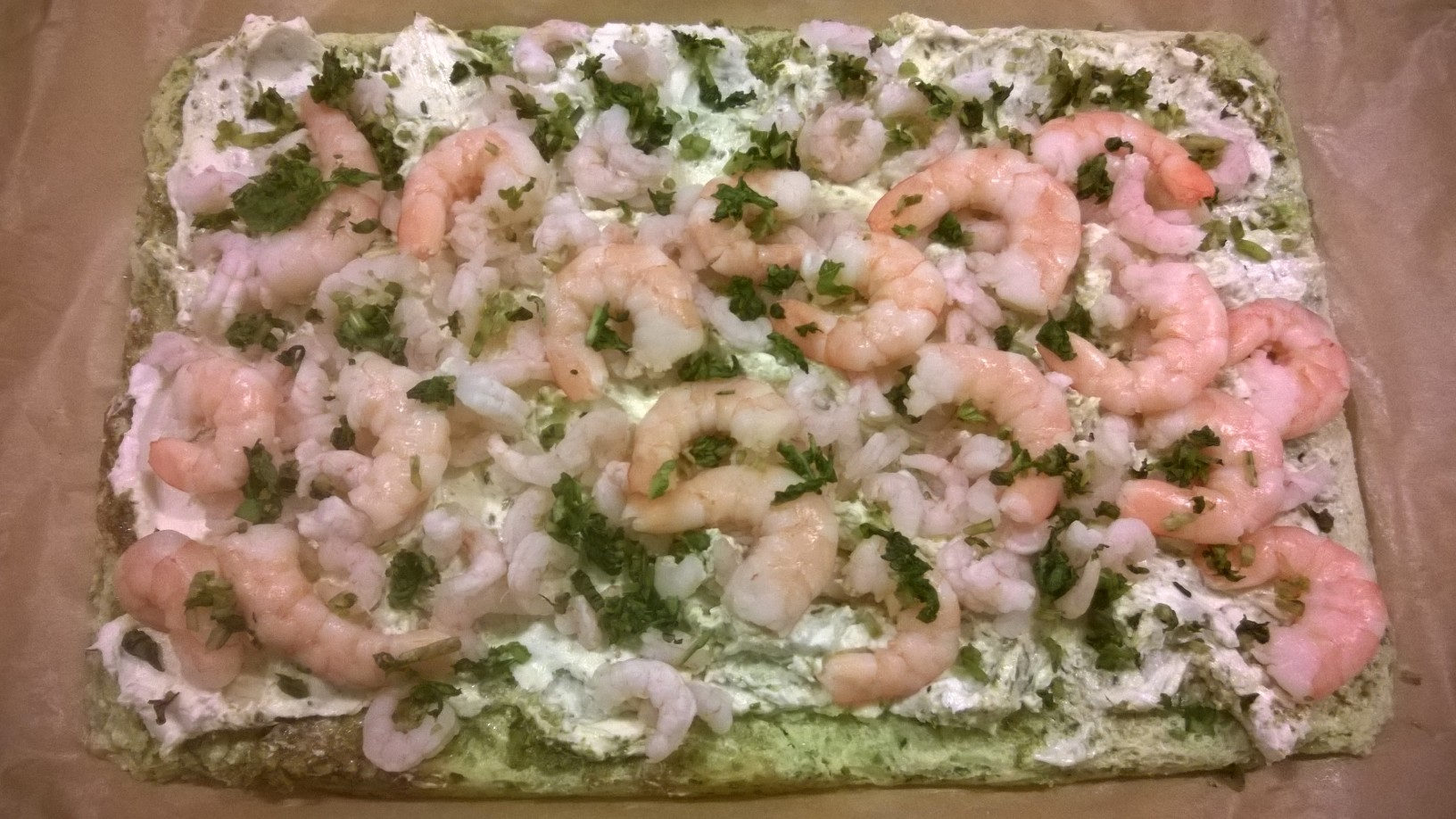
King Prawn, Courgette & Mascapone Roulade – an elegantly simple masterpiece! Low-carb and perfect for diabetics. Keto-heaven!

prawn roulade

This is one of those dishes I often reserve for dinner-parties. It looks so amazingly impressive and professional, but in actual fact it couldn’t be easier to do. If you’re not a fan of prawns, these can be substituted with salmon, crab, shredded smoked-ham or chicken.

Start by lining a baking-tray with tinfoil. Grease this with a layer of oil to stop the roulade from sticking. Next grate your courgettes on the fine side of the grater. How much? Sufficient to cover the base of your baking-tray to circa 1/2 cm in depth.

Beat your eggs in a mixing bowl, adding a pinch of nutmeg, salt and pepper. You should judge the egg by eye, to a rough ratio of 1 part egg, 3 parts courgette. I used 3 large courgettes and 3 eggs. Pour onto the grated vegetables and then swirl the mix with your fingers, to ensure that everything is evenly coated. It shouldn’t be too ‘pondy’; rather a texture that’s more than damp, less than soaked; picture gravel in the rain!!

Bake on the bottom of the oven for circa 20 minutes, until set and spongy to the touch, but not too brown. Then after a couple of minutes, turn it over onto a large sheet of baking-paper, browned side down.

Whilst this is cooling, season your mascapone and ‘marble’ the mix with a little basil pesto. Once the roulade has cooled, spread the mix evening over the upturned surface and scatter on your prawns. Season and sprinkle with chopped basil.

prawn roulade 2

Using the paper like a large sushi-mat, roll the roulade towards you, starting at the top like a big swiss-roll. When it has completely rolled onto itself, pat down slightly so that it forms a flat base. Lift off the paper with a palette-knife and transfer to your serving-dish.

Serve the roulade with salad leaves in a tangy dressing, such as vinaigrette or fresh lime and sesame oil. Sublime!

Thanks for reading and bon ap!

Adam.

Insulin – your body’s OCD housekeeper!

When you eat carbohydrate, your body has two ways of processing it:

  1. You burn it as energy
  2. Your body stores it away for a ‘rainy day’, by converting it to fat.

Unless we’re incredibly active, the volume of carbs we consume is never feasibly going to be burnt off. Much of it goes straight into the store-cupboard; for that rainy day, which never comes. In this way, we get fatter and fatter.

So if we end up stock-piling all excess carbs as fat; what it is that actually does the piling? Who stocks the larder? Yes, you’ve guessed it; insulin!

Insulin is your body’s OCD housekeeper. It keeps the shelves nice & stacked with flawless efficiency! Every time you eat, it’s ready and waiting; obsessively keen to ‘tidy up’ and pack the glucose away in a never ending spring-clean.

Things might be okay if insulin just left things at that. But no.

Like all good housekeepers, insulin is fanatical about keeping busy. When it’s gainfully employed, it sends the brain a message to say “All’s fine, I’ve got plenty to do. You’re nicely full!” But when it begins to sense a lull in work, it sends the opposite message upwards: “Better eat something! You must be hungry! I need more sugar to clean-up! Eat something quick!”. You then get hunger pangs and reach for the nearest snack.

How many times have you thought to yourself: “How can I be hungry? I only had breakfast an hour ago?” Or equally: “I’m absolutely stuffed, but I suppose I could just squeeze in that one last chocolate!” That’s your brain telling you “I need more fuel!” In actual fact, all that’s happening is your sugar-levels are starting to drop.

Insulin therefore has two functions. First of all, it’s the hormone which prevents fat-burning and promotes fat-storage. And secondly? It is a satiety hormone, sending messages to your brain that you’re either full, or need more glucose!

The truly destructive thing about insulin’s secondary function, is that the message somehow gets lost in translation. The message “you’re full” actually translates to “you have enough fuel, don’t worry” The message “I’m making good progress at stockpiling all this glucose” is interpreted by your brain as “Panic stations! You’re running out of energy!”.

There’s a distinct language-barrier between the two; one that ends up in mixed signals, and leaves you craving sugar, despite the fact you’ve just had lunch!

So how do we get around this confusion in meaning? Is there a way to stop your brain thinking it’s running out of energy as soon as your blood-sugars start to drop?

The answer is ketones and saturated fat.

Your brain can burn either of two fuels: glucose or ketone-bodies (it can even burn both!). Unlike glucose, ketones are a constant source of energy for the brain. They’re produced by the body, so are not dependent on your food-sources to keep the brain happily fueled. Ketones are only produced when glucose is unavailable. Therefore cut your carbs.

Because fat is far slower to metabolise than glucose, it slows down digestion when it enters the intestinal-tract. When you’re busy digesting, your brain knows that you’re full and your appetite is decreased.

This message is fundamentally different from the ‘drama-queen’ signals fired off by your OCD insulin-housekeeper! It’s a reliable message, where both parties speak the same language. To take advantage of this message, eat more fat.

A fat-metabolism prompts you to eat when you’re hungry, then stop when you’re full.

Glucose drives you to eat to when your sugar-levels drop; it has nothing to do with how much you’ve eaten or whether you need food.

In understanding this, lies to key to harnessing your metabolism and regaining control of your relationship with food.

The ketogenic-diet allows you to lose weight with no hunger pangs. There’s no desire to snack, nor do you suffer the roller-coaster ‘highs and lows’ associated with drops & spikes in blood-sugar.

For me, it’s time my OCD housekeeper took a holiday. And I’m going to do all I can to make sure it’s a permanent one.

And no; I don’t need a postcard!

Thank you for reading,

Adam.

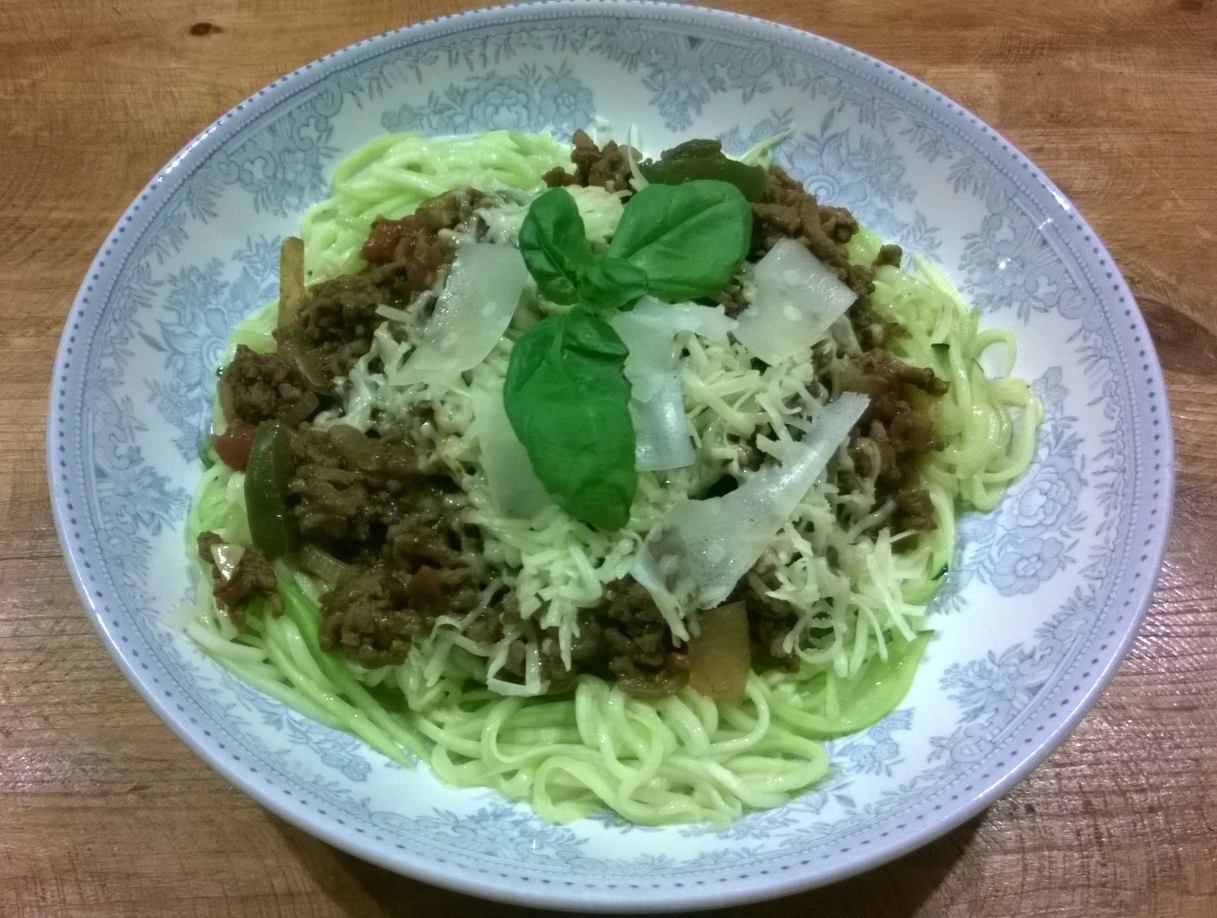
Classic Spaghetti Bolognese with a Twist… No Carbs! Perfect for gluten-intolerants, diabetics, or anyone who loves pasta but not its effects!

spaghetti

I’ve already waxed lyrical about the wonder of ‘zoodles‘ in an earlier post. I shan’t do it again (well maybe just a bit…) but they’re brilliant! I don’t even mind the silly name, they’re so good.

Bolognese has rather been off the menu of late, because it really needs something to go with it. Salad doesn’t cut the mustard here & steamed vegetables lack the ability to soak up all the sauce. As a result, I’d stopped making it, which is a pity as it’s cheap, quick & delicious! Stopped that is, until I discovered courgette-spaghetti…!

I’ve explained how straightforward this is in a separate post all of its own. The below therefore chiefly details how to make a low-carb bolognese sauce.

I really think you should  try this dish. When you stop having an old favourite because your dietary requirements forbid it; food very much begins to lose its charm. Inversely, when the same foodstuff can once again be welcomed back, it feels as if the prodigal son has returned! Well in our house, the red-carpet’s rolled out and the flags are flying for spaghetti. Long may she reign!

Place a thick-bottomed pan on the hob and leave it to heat through. Season your minced beef and then add to the pan. You really need the pan to be good and hot. If it’s too cold, the meat will start to steam, rather than seal. Supermarket mince especially can give off an unpalatable smell of ‘wet dog’, if it’s allowed to steam in this way. You want to hear a good strong sizzle from the pan, and the odour should be one of cooking steak, not brine!

Leave to seal on each side before stirring. Once sealed, add a finely sliced onion and chopped garlic & leave to cook until the onion has started to soften. Don’t pour off the fat – we’re on a ketogenic diet here, so it is very welcome. De-glaze the pan with a small glug of red-wine or port and then stir in a drained can of tomatoes.

Crumble in a stock cube or two and season. Dried or fresh herbs can be added, as can a very small squeeze of tomato purée. If you’re not trying to lose weight or are a diabetic who has a higher carb-threshold than I can currently manage; you can be more liberal with the wine, tomatoes and purée. Add a little water (just enough to cover) so that the mix doesn’t get too dry. Feel free to add any low-carb vegetables such as mushroom, spinach or green-beans to the mix; depending on your preference. Simmer on a low heat for 20 minutes until the sauce is rich and thickened.

Meanwhile sauté your courgette-spaghetti in a little butter. Two minutes should do it. You’ll need to add a little salt, but this can be easily adjusted when you check the zoodles to see if they’re done. You want them to still retain an al dente bite; just as you would with any pasta. No-one likes a plateful of texture-less slop!

Serve the noodles into a bowl, then ladle on a generous serving of bolognese sauce. Top with an almost indecent amount of grated cheese et voila! Dinner is served.

Thank you for reading and bon ap!

Adam.

‘Zoodles’! The Vegetable Food-Revolution is Here! Low-carb, diabetic-friendly, vegan & gluten-free. They’ll change the way you eat forever!

zoodles

Like a lot of people, I’ve always loved pasta. But pasta comes at a price! Weight-gain & bloat!

Pasta must be one of the worst things for diabetics. Whether white or wholemeal, it sends an instant hit of glucose to the bloodstream, catapulting blood-sugars sky high! Once insulin-levels have kicked into overdrive, to clear ‘the glut’; energy levels come crashing down again & the glucose-cycle kicks in, leaving you craving more starch even though you’ve just consumed enough calories to run a mini-marathon!

Regrettably my life is better off without it. Until now!

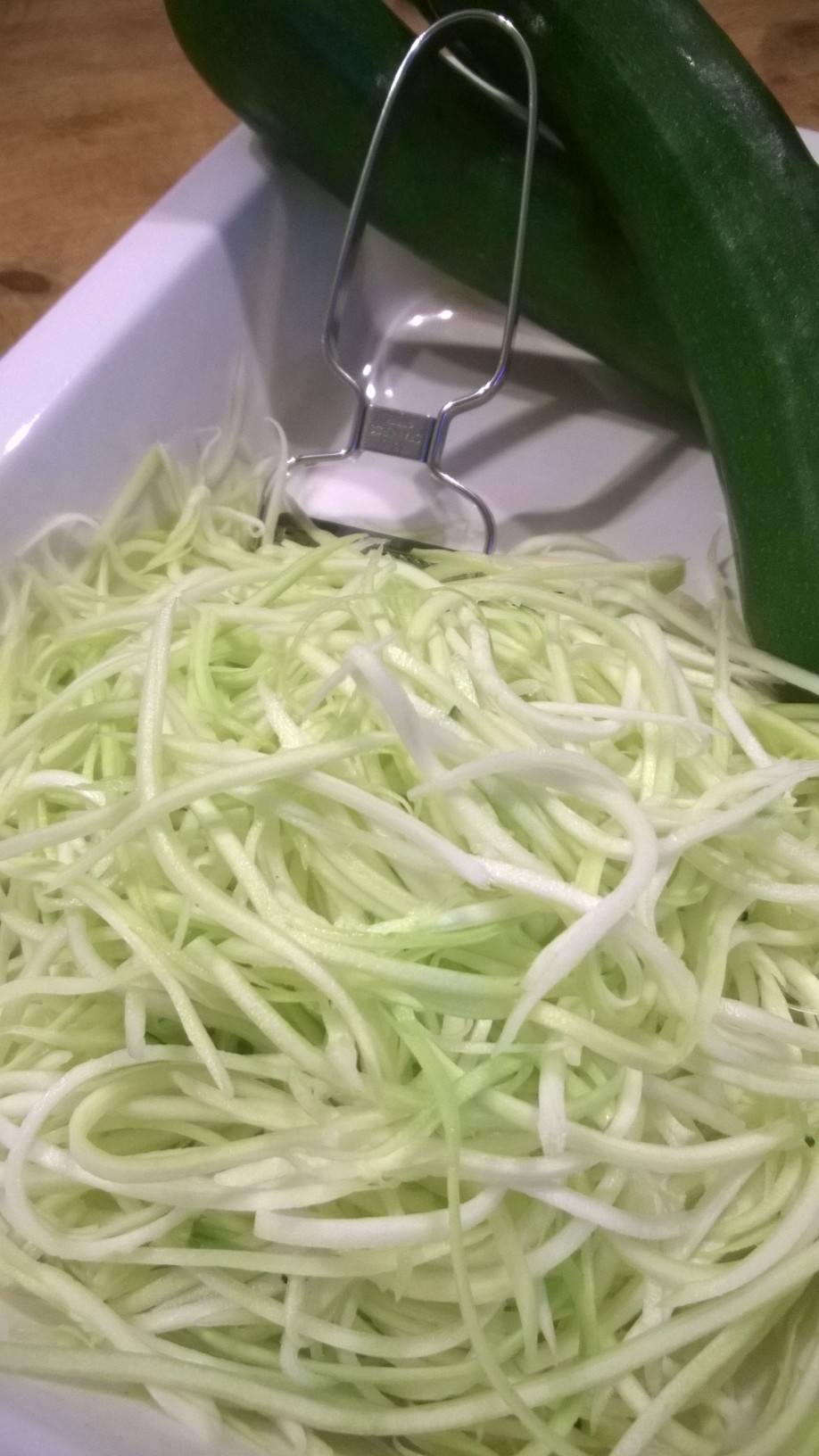
Introducing ‘zoodles’ (zucchini noodles as the Americans would say; courgettes this side of the pond). They could not be easier and work in a multitude of dishes. Think of them as a far better substitute for pasta, oriental & european noodles.

Spaghetti, linguine, tagliatelli, pad thai noodles, vermicelli – suddenly carbonara is a low-carb ketogenic dish!

All you need is a julienne-peeler (or Spiralizer – on my Christmas list!!). Peel the courgettes for a more ‘traditional pasta’ look, or keep the skin on. Peel down the vegetable with the julienner and leave to sit on kitchen-towel for half an hour or so. You can use them straight away, but there’s a small risk they’ll go a bit soft due to the high water-content.

I like to sauté them on the hob in a little butter or oil for a few minutes, but you can equally boil them in water for 1 minute or microwave them (covered) for two.

Their versatility is only matched by how good they taste in everything you try. No impact to blood-sugar, no bloat, no insulin-induced hunger-pangs… You may be getting the feeling ‘I couldn’t recommend them highly enough’… Well I can’t!

Thanks for reading and bon ap!

Adam.

My own health v the planet? Can a ketogenic-diet be sustainable, both for me & for future generations?

Naturally this diet is having a considerable impact on my waistline! There are other impacts to be considered however, such as the potential environmental-impact that my food-choices may be having.

I must admit that this has been nagging at my conscience a little. Meat and dairy have an astronomically high environmental-footprint. Beef – 16kg of CO²e/kg, lamb 17kg CO²e/kg & butter 17.6kg CO²e/kg… Need I go on? Compare this to the humble carrot at circa 0.05kg CO²e/kg and I begin to feel a little uncomfortable…

This requires a lot more thought and research than I’ve yet had time to undertake. But is my diet so bad for the world that I can conscience continuing it? Are the polar-ice-caps going to melt any faster, simply because I’ve started to eat bacon for breakfast in place of muesli…?

This blog can’t go into the full detail of this conundrum; there isn’t sufficient space & my small audience would rapidly dwindle if I switched tack & went off at a tangent. The below details a few thoughts I’ve been having as a starter for ten! Hopefully this will introduce a few positives into the equation & guide the thought-process to pastures greener.

1. Calories v Volume

My calorific-intake on a fat-based metabolism remains the same as that of a glucose-fuelled diet (yet my weight is decreasing). Calories remain unchanged, but the volume of food I eat has more than halved! 

Fat is a far more efficient fuel-source than any other. The calorific-density of fat is 9 calories per gram v 4 calories from carbohydrate.

The high levels of saturated fat in a ketogenic diet mean that you feel full on a vastly reduced volume of food (I estimate that my portion-size has literally halved in comparison to when I was eating glucose). I’m therefore eating less.

2. Decreased Volume v Greenhouse Gas (GHG) Intensity 

It’s all well & good stating a positive that ‘I’m eating less’; if the food I’m eating is proportionately far higher in GHG-emissions than previously. But is it? Has my consumption of animal-products increased?

Portion-sizes of meat and dairy have actually decreased a little in my evening meals. This is due to the ketogenic-diet’s ability to make you feel full on a lower volume of food. This is naturally counteracted if I’m adding additional quantities of animal-protein to both breakfast & lunch.

Am I eating more meat & dairy at lunchtime? Arguably not. My lunches have invariably always consisted of either leftovers or things like cheese or tuna salad. I would say that the same rationale applies here, as it did to dinner. I’m eating less by volume, but for lunch the animal-product ratios haven’t changed from before (a cheese salad is a cheese salad). Carbohydrate has simply been substituted for fat, so I therefore feel full on a smaller amount. Again; so far so good.

What about breakfast? This is the one thing that has changed. I now eat eggs, cream, cheese & meat for breakfast, whereas I’d previously been eating muesli. In this one area then, I’m eating a higher quantity of animal-products than before. Is this volume-increase greater than the slight reduction I’ve experienced in dinner? I suspect it may be. I’ll have to give this some thought and get back to you.

3. Severed-Ties to Industrial Agriculture

For the last 4 weeks, I’ve consumed nothing that’s a product of modern intensified agriculture. No grain, sugar, wheat, barley, rye, potatoes, carrots &tc. (I claim one exception to this – gin!).

Modern industrialised agriculture drips fossil fuel. From the artificial fertilisers which are liberally broadcast over the land, to the energy-intensive refining-processes required to translate the arable-crops we farm into something we eat. I cannot quantify that reduction, but the thought is something which interests me and deserves greater scrutiny.

4. Increased Levels of Seasonal Produce, Animal-Welfare, Use of Organics, Food-Provenance, Shorter Supply-Chains &tc

When you cut a large food-group out of your diet, the quality of your remaining foodstuffs tends to increase. What do I mean?

I’m eating a HUGE QUANTITY of vegetables. Far more than before. When vegetables make up three-quarters of your plate, you want to get maximum taste from your restricted food-pool. This means that you increase the variety of seasonal produce you use, not just using the same old things day-in, day-out.

I’m going to the greengrocer’s & farm-shops far more regularly now in an effort to get the freshest, tastiest produce I can find. Local ‘home-grown’ organics are now a daily staple, as are trips to the butcher. The meat and dairy we buy now has the highest degree of provenance and traceability that I’ve ever managed. Simply because the restriction in food-diversity means we want the best of what’s available to us. This equally applies to organic meat, allotment produce and fresh free-range eggs.

In this respect at least, I feel better about the food I’m eating than ever before.

5. No Processed Food Whatsoever!

I’ve never been a processed food kinda guy! Because processed food is often where the ‘nasties’ lie (poor food provenance, low-welfare standards, e-numbers), these are totally ruled out of a diet which takes ‘real food’ as its main focus.

A LCHF diet has a lot in common with a number of other food-movements, such as the following:

  • The Slow Food Movement
  • The Organic Movement
  • The Local-Food Movement
  • ‘Real-Food’ cooking-movements in all forms!

The one negative therefore seems to remain the GHG-intensity of what I’m eating. Will this always then be a problem?

No. Currently I’m in the weight-loss phase of a restricted-carbohydrate diet. Once that phase is over, I’ll be able to reintroduce a lot of the things that I’ve currently ruled out. Picture pulses, oats, fruits, root-vegetables, nuts, seeds, yoghurt &tc.

Once this initial restriction-phase is over, I envisage my ketogenic-diet to be one of impeccable food-ethics. All ingredients will be unprocessed, unrefined, fresh, seasonal, traceable, local (where applicable) & HEALTH-PROMOTING!

In my mind at least, that’s no mean feat!

Thanks for reading,

Adam.

Breakfast! You don’t find ‘Special K’ in a hedgerow…

mushroom

‘Nuff’ said!

Week 4 – Sun 26th October

Well, I’m four weeks in now. Just to remind you all, I started the ketogenic diet at 15 stone, 10 pounds. My goal is 12 and a half stone, by mid-March 2015. This means a target weight-loss of 2lb per week.

Week Four’s target weight therefore? 15 stone, 2 pounds.

It’s also a nerve-racking day, because it’s the first of my monthly waistline-measurements. When I started the diet, my waist-circumference was 45 inches. Above 40 inches and you enter the danger-zone for developing coronary heart disease, high blood pressure and diabetes. My partner is already type 1 diabetic; so if I developed type 2 through poor lifestyle choices, then that would verge on the ridiculous!

I step onto the scales…

15 stone, 1 pound. Ahead of target and a 3lb reduction from last week! I’m now 9 pounds lighter than I was four weeks ago. I’ve crossed the half-a-stone barrier, which is brilliant; and I’m rapidly approaching the ’15’ milestone, which feels really positive.

I’ll be so pleased once I make it back into the ’14 stone’ territory. I’d been so shocked when I stepped on the scales some 6 weeks ago. In my mind, I’d maybe put on a couple of pounds; I’d thought I was ’14 stone something‘…; but to then discover I was 15 stone 10 was horrific! It had crept up so gradually, that I’d never really noticed it.

I’m a little nervous of the tape-measure. Scales are fairly ‘plain speaking’ when it comes to weight. Yes, you can shimmy around on tiptoes or balance on one leg to try and get ‘a more favourable reading’, but ultimately you know you’re just cheating yourself. The tape-measure is a little harder. Have I measured at exactly the same point as last time…? Is it completely level…? Am I breathing in too much, or am I pushing my stomach out artificially to go for ‘worst case scenario’…? In short, the tape-measure feels a little bit like an audition!

With trepidation, I stand in front of the mirror and ask myself all the above questions, to try and come up with a realistic answer. 44 inches definite! I’ve lost one inch from the circumference of my waistline, which is brilliant! Just four more to go before I’m out of the danger zone.

As I said last week; there’s a stage of weight-loss when you start to feel a bit slimmer. I’m definitely there now. Because I love cooking, I spend a lot of time in an apron. Four weeks ago, this tied under the stomach, which looked and felt dreadful. Now, it’s back to tying around me! The trousers are starting to follow suit, but I’ve never particularly been a fan of ‘armpit-huggers’, so these tend to sit more around the hips than the stomach.

And physically? How am I feeling aside from the weight?

Pretty brilliant actually. The headaches have completely gone and energy-levels are incomparable to what they were before I started this. I feel active and want to be moving around outside a lot more (whereas previously the sofa and a book were the main draw!). Mood is so much better and grumpiness nearly gone. As before, the fact this is working is definitely boosting my optimism!

I’m still thirsty a lot of the time. I haven’t yet discovered whether this has to do with ‘losing weight as the fat cells deplete’; or whether it’s a side-effect of the ketosis itself. Body-temp feels normal, but as I haven’t been tracking this, I have no point of comparison!

The one thing I’m slightly paranoid about is acetone on the breath – a side-effect of ketosis. I’m sure this hasn’t been a problem (certainly no-one has said anything), but I hate the fact they might! To counter this I’ve been sucking sugar-free mints. I’ve always been a peppermint-tea drinker throughout the day, so this also helps combat my paranoia. I’m hoping that, as ketogenic-adaptation kicks in (more on that in another post); this side-effect and others will disappear completely. Only time will tell on this one!

All in all, it’s been a really good week. Motivation is very high; and I really feel that I can 100% achieve my goals if I stay focussed. Still missing trips to the pub, but as these were part of the problem, it serves me right!

With a bit of luck, I’ll dip down below 15 stone by next week. That only requires one & a bit additional pounds from here, so if I stay in ketosis, this should be do-able.

Please do ‘look in’ on me next week, to see if I meet my targets. I find it really positive to have people read this – the support is a massive encouragement!

Thanks for reading, and have a great week,

Adam.

Bats in the Belfry – a Plague of Pipistrelles…

guestwick church

Part of my journey to explore all that a ketogenic-diet has to offer, is a journey of another kind… a journey on foot. Come hell or high weather, I’ve committed to a daily dawn-walk.

This is just over a mile in length and aims to put a little more movement back into what was becoming an increasingly sedentary life.

Looking out over the fields each morning, I see four churches in the distance. The first and second have already been explored in this blog. Now it’s time to meet the third, complete with its inhabitants…

The above depicts a beautiful, rambling old medieval church, typical of so many you see in this area and the wider English countryside. The pace of life doesn’t touch this place. It’s timeless in every way. But as the evening-time dusk descends, an entirely different picture begins to emerge…

From out the tower begins to leech a dark stain, which fills the sky like smog. Not smoke, but a vast army of bats emerging to feed after their long day’s cloistration.

The sky becomes electric with the sound of sonic chatter, just too high to be audible; but still causing resonance within the ear. They dive, swoop and bomb through the sky, swerving their way round invisible barriers & descending on prey too small for the eye to make out in the half-light. It’s a strange, majestic dance, to which none but they know the steps.

The interior of the church bears constant testimony to their presence. The pews and altar are all covered in a thick white plastic, to shield against the corrosive nature of their droppings! A smell of musk is almost overpowering and the stone floor is grainy underfoot.

The bats can’t be removed as they’re a protected species. So man and winged-mammal must share this space which our neglect allowed to fall vacant.

They’re certainly making better use of it than we are. One hour-long service a month is all we can muster. And when the last few elderly inhabitants of the village pass on, I suspect even that will stop!

I say ‘leave them to it’. Something’s got to use the place.

An englishman’s home is his castle; an english-bat’s base is its belfry! And all things considered; they couldn’t have picked a finer one!

Thanks for reading,

Adam.

One man’s struggle for survival in… “The Quest for Breakfast!” Coming soon to a blog near you…

Sometimes the morning walks serve a greater purpose than just exercise & thought-time alone… Sometimes, they’re a mission & a fight for sheer survival…!

All that stands between breakfast and our hungry man-in-wellies, is a treacherous & death-defying landscape of unknown perils…

To reach the eggs, which lie in a box at a distant farm over the fields…

Will he make it through the savage and terrifying jungle….????

path

Will the bridge of doom prove his undoing …?

bridge

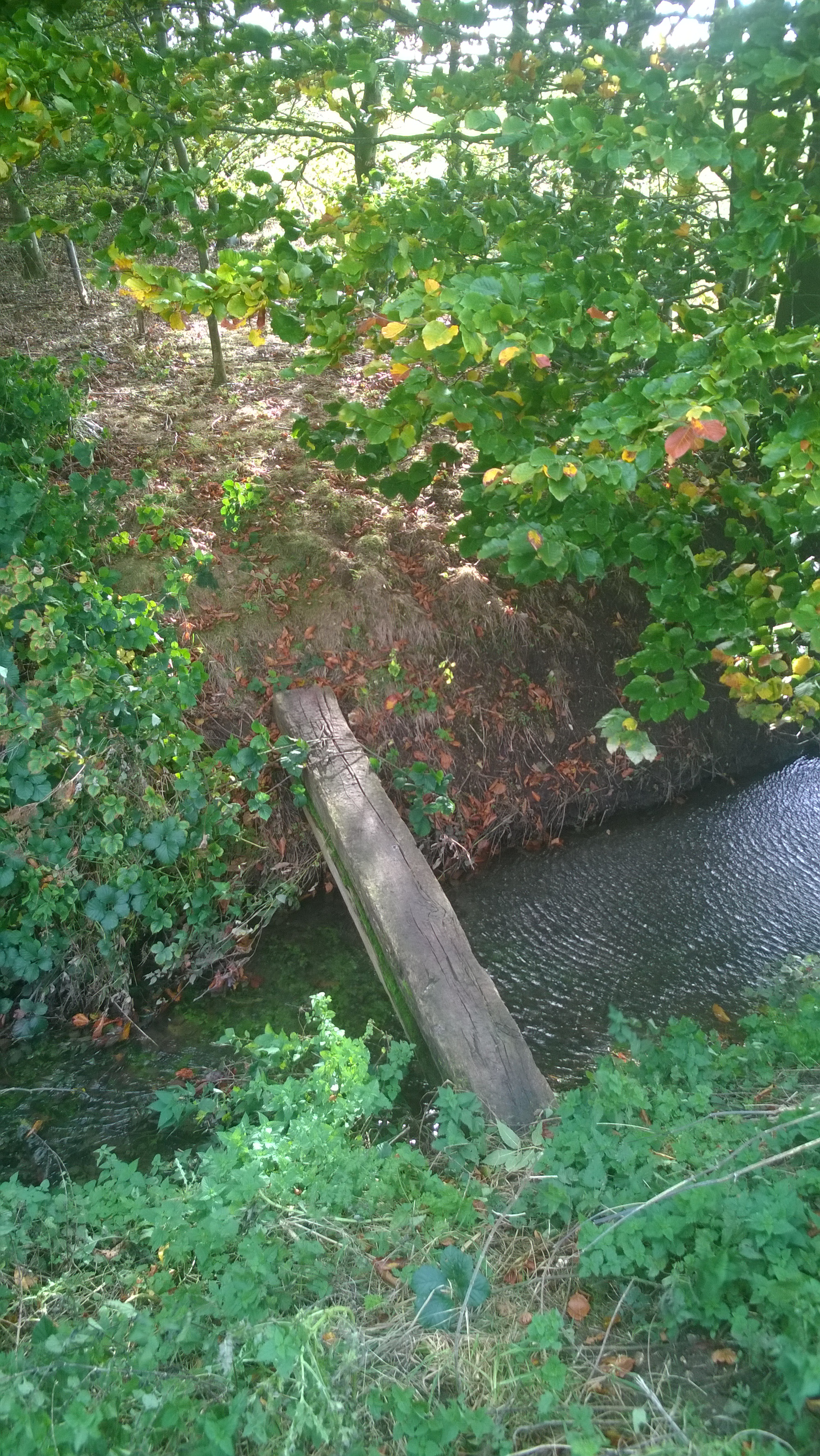
Will ‘the plank’ herald his demise, sending him to a cold & watery grave…?

WP_20141018_036

Or does a more gruesome, foul and tortuous fate await him in the jaws of THE HUNGRY, RAVENING MONSTER!!??

WP_20141019_010

Dare he hope win his one true prize??? That elusive and highly coveted ‘dozen of breakfast eggs’?????

breakfast

Yes he did dare. They cost him one pound sixty pence and were very nice thank you.

With script-writing skills like this, it’s amazing I haven’t been snapped up by a film-studio years ago….! The invitation must have got lost in the post!

Thanks for reading,

Adam.

Chicken in a Creamy White Wine, Tarragon-Sauce with Roasted Courgette-Gratin – A timeless classic that’s quick, easy & full of flavour. A foolproof, low-carb masterpiece!

WP_20141024_007

In our search for the ‘interesting & different’, we sometimes overlook the classics. The joy of this dish is that it’s so incredibly straightforward, yet tastes as if you’d been slaving for hours! Use any cut of chicken you like, but chicken breasts are by far the quickest. On a week-night, that can be a real blessing!

The addition of double-cream makes the sauce velvety smooth; so professional that people will think you’ve graduated from the Cordon Bleu school of French cookery! No carbs, no guilt. Just pleasure.

In a thick-based sauté-pan, melt a little butter then add your chicken. Seal on both sides until it’s golden brown and caramelised. I say the following again and again… do not poke at it or move the food around in the pan until it’s ready to be turned. No-one likes to be mothered and the same goes for your dinner! Don’t fuss at it. If you attempt to move it too early, you risk ‘tearing’ the meat’s surface, and you’ll never develop the caramelised, seared-on crust that de-glazes from the bottom of the pan & adds richness and depth to the sauce. Touch it gently with your finger; if it comes away from the pan’s surface with no resistance, then it’s ready to be turned. If it stays put, then the surface hasn’t sufficiently sealed / caramelised & it needs to cook a little while longer. Equally, never ‘crowd’ the meat in the pan. If it’s too close together, you lower the temperature in the pan and the food starts to steam not sauté. Trust me and try it; the results will speak for themselves!

Lecture over (sorry). Add sliced onions and some finely-chopped / crushed garlic a minute or so later. Cook on a medium heat, ensuring that the onions don’t brown; rather go soft and translucent. Then crank up the temperature and de-glaze the pan with a little white-wine to release the flavour. I always love the big, heavy ‘sigh’ it gives, as the liquid comes into contact with the hot metal and evaporates. Italians call this ‘il sospiro’, literally ‘the sigh’; it’s the perfect word for it, and the sign that you can finally relax after a long day…!

Pour in chicken stock (or water and stock cubes) until the contents are waist-deep in liquid. Add chopped tarragon and season. Leave to cook on a low heat until the sauce has reduced to half its volume. You can do this on the hob, or in the oven.

Meanwhile, roughly slice your courgettes. Throw on some chopped garlic and mix in a roasting-dish with a thick coating of olive-oil. Season and roast for half an hour until the courgettes are soft and unctuously delicious. Grate on a good whack of strongly-flavoured hard-cheese (I used cheddar), then place until the grill until golden brown.

Whilst this is browning, stir a generous amount of double-cream into the chicken. Cook on the hob for a minute or so, stirring occasionally until it thickens. Serve up the chicken & gratin side-by-side, piling the onions and sauce all over the dish in ‘generous, luxurious lashings’. Finish with a final flourish of chopped herbs and dig in! There’ll not be an ounce left on the plate!

Thanks for reading and bon ap!

Adam.

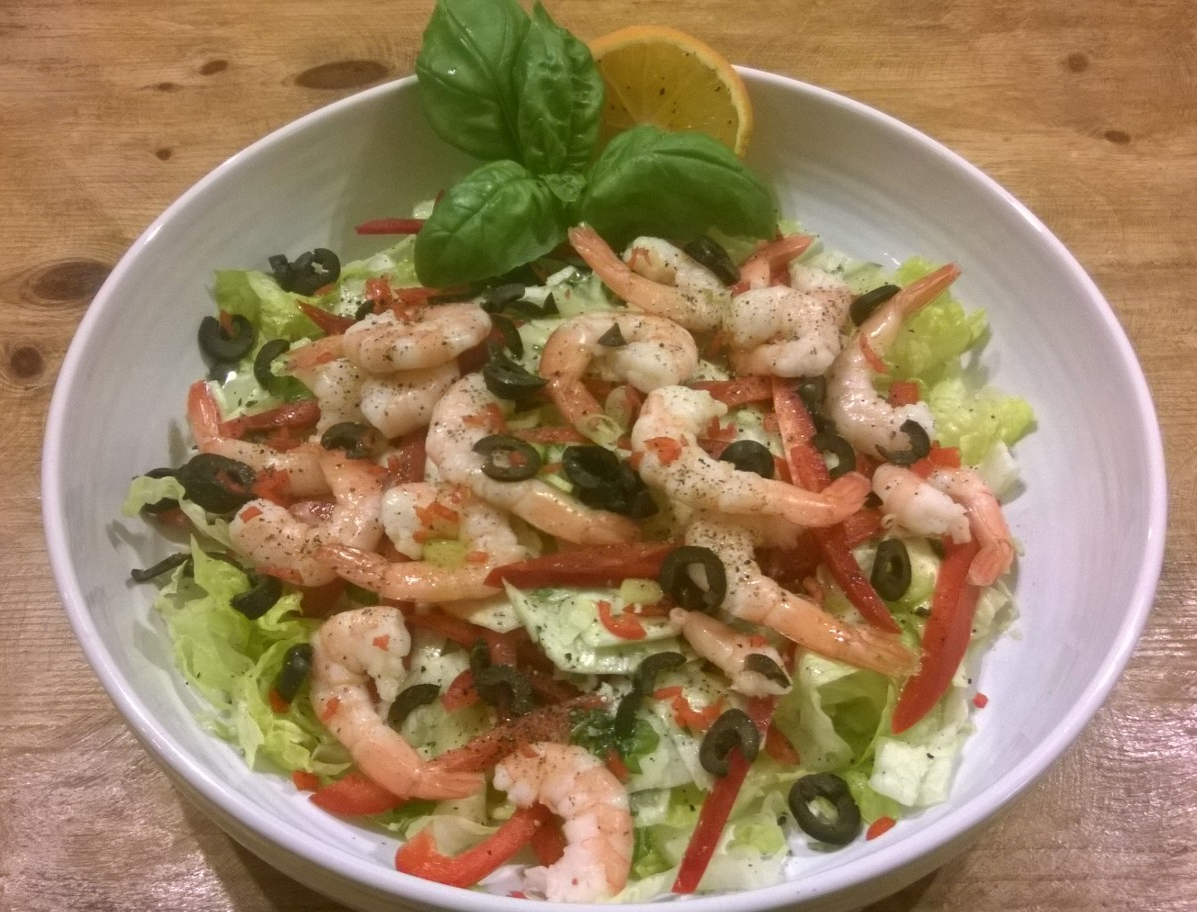
Prawn, Pepper, Parmesan & Celeriac Salad, with Fresh Basil, Olives & Chilli – Refreshingly different, diabetic-friendly, low-carb & delicious!

prawn 2

Few people realise that celeriac can be eaten raw. In many ways, that’s the nicest way to prepare it. Salads based solely on green leaves can sometimes feel a little anaemic. Micro-thin slices of this chewy root vegetable give a salad that all important ‘fill-factor’. This is a rarity for low-carb dishes, so I recommend you try it!

Because the celeriac is eaten raw (and cold), what little carbohydrate there is, is so slow release that diabetics can tuck in without fear of glucose-spikes or any impact to blood-sugar. But above all things; it’s incredibly delicious so give it a go! Perfect as a starter or light lunch, it’s always nice to do something that little bit different; and this dish is certainly that.

Peel your celeriac (the big ugly) then shave into micro-thin slices. You can either do this with a food-processor, mandolin-slicer, or simply just continue with the vegetable-peeler (my preferred option as less washing-up!). Put this into a mixing-bowl and glug on some good quality extra-virgin olive-oil, sufficient to amply coat. Season with rock salt and coarse-ground black pepper, then shave on a liberal quantity of parmesan. Finely chop some fresh basil and add this. Stir and leave to develop in flavour for a least half an hour.

Meanwhile, slice your peppers, olives & chilli, and de-shell your prawns. If you’re not a chilli-fan, feel free to leave it out. You could equally substitute the prawns for any fish, chicken or smoked ham.

Form a bed of lettuce in the bottom of your salad bowl, pile on your celeriac-mix, then scatter your peppers, olives, chilli and prawns over the top. Finish with a final glug of olive-oil and torn basil-leaves. Delectable!

Thanks for reading and bon ap!

Adam.

What are Net Carbs? The role of fibre in a low-carb / ketogenic diet..

Fibre is a wonderful thing! Not only does it ensure that the food we eat ‘keeps moving’ through the digestive-system; it can actually help lower cholesterol and aids the prevention of a whole host of nasties… (NHS states heart disease, diabetes, some cancers &tc).

Whilst I can’t comment on the ‘preventative’ health-qualities of fibre; I can tell you a little bit about it, and why it’s so important to the ketogenic-dieter or diabetic.

People are often surprised to learn that fibre is actually a form of carbohydrate (alarms bells ring for all low-carb readers everywhere!!!). Having said this; it comprises the parts of plants which we cannot digest and is therefore not absorbed by the body. As such; it’s not a nutrient and contains no calories or vitamins.

Examples of indigestible plant-fibres include cellulose (the plant’s cell-walls), lignin (derived from the Latin word for wood & the thing which makes vegetables crunchy); and suberin (a waxy, rubbery material which is water-resistant, therefore acting as a barrier to moisture-loss in roots, bark &tc). Such fibres are not absorbed in the small intestine and pass straight through to the large intestine intact.

Because fibre is ‘rough’ and combines with other foodstuffs to ‘shift’ them through the digestive-tracts; it contributes to feelings of ‘fullness’/ satiety. This is a major advantage to both dieters and weight-stable people alike! The fuller you feel, the less you’ll eat!

Fibre comes in two forms:

  • Soluble fibre
  • Insoluble fibre

So what’s the difference?

Soluble fibre does as the name suggests: it attracts water and dissolves into a form of ‘gel’ in the gut. This gel helps to slow-down the digestion of other foods, including (yes!) carbohydrate and sugar. This is particularly important for diabetics. Why?  The slower the rate of carbohydrate-absorption in your system, the more stable your blood-sugars, and the lower the risk of glucose-spikes in the blood-stream.

Stable blood-sugars = better insulin management = improved health!

Examples of soluble fibres include fruits, legumes, oats (all forms of fruit & vegetables to varying extents).

Insoluble fibre is equally aptly named. It’s made of the more structural parts of plant (the lignins &tc). As a result, it also attracts water, but instead of forming a gel; it ‘puffs up’ & adds bulk/softness to other less fibrous foods. In-so-doing, it regulates the passage of foodstuffs through the intestines, thereby promoting digestive health in general.

Examples of insoluble fibres include bran, beans, green leafy vegetables, nuts & seeds.

So we know what it is and what it does. But why is fibre of special importance to a low-carb diet?

Firstly, low carb diets often consume a higher proportion of meat & dairy products than other regimes. These require good levels of fibre to secure their transit through the digestive-system

Secondly (and of supreme interest!) – because dietary-fibre is a carbohydrate which comprises the indigestible parts of edible plants; fibre should be subtracted from the total carbohydrate-content of foods, because we cannot digest it!

Yes – we minus fibre from carbohydrate whenever we calculate the carb-value of what we’re eating. This reduced figure is termed the ‘Net Carbs’ (i.e. the true nutrient-value of the carbohydrate we’re consuming; not the parts which pass straight through intact).

For many foods, this will render what seems like a high carb-value into something that’s both acceptable, and can be eaten freely on a ketogenic-diet.

Example: Carbohydrate 10g minus fibre 8g = net carbs 2g.

Sugar-alcohols should also be subtracted, but these are often hard to distinguish on UK food packaging, so are omitted from this post.

Armed with this quick and easy ‘carb-counting-tool’; shopping, cooking & ‘living’ a low-carb diet all become instantly easier and more accessible!

I hope this helps and thanks for reading,

Adam.

‘Old Ketonians’ – the pagan past of this ancient state!…

green man

As you’ll have learnt from yesterday’s post ‘Ketosis – an ancient & historic state‘; I can see four churches on my daily ramble to health and well-being.

The second of these carries a reminder of this land’s pre-Christian origins: The Green Man, Lord of the Greenwood.

Early Medieval architecture in England will often feature this ‘foliate-face’, in the form of gargoyles, bosses or corbel-carvings such as this. The exact meaning of this iconography has been lost to time; but it’s believed to date back to pagan times, when forest folklore was strong and the seasons were ruled by two opposing warlords; the Holly King & the Oak King.

Christianity was slow to catch on in a country which has always been steeped in druid culture. Add to this the invasions of pagan Romans & Vikings; and it becomes easy to understand why ancient folklore retained its resonance until well into the late-medieval period.

This particular Green Man is a much loved local figure. He stands at the entrance to the church, where generations of hands have touched him for luck!

We’re at that time of year where the leaves have all but fallen from the trees, and the holly will soon bear fruit. In light of this, maybe I’ll drop by and give the Green Man a friendly pat. Anything to ward off the dark on these gloomy mornings is definitely worth a try!

Thanks for reading,

Adam.
WP_20141019_027

Rich, Aromatic ‘Quorn’ Tikka Masala with Cauliflower & Scallion Mash. Low-Carb, Ketogenic & Vegetarian! What more do you need?

curry

It’s not often than low-carb & vegetarian go hand in hand. I thought I’d buck that trend with this recipe, and show that it’s not all about red-meat and dairy! This recipe has always been one of my favourites. I love Quorn, and these ‘chicken-style’ pieces are a brilliant freezer staple!

You have to read the packets carefully, as some Quorn products can be high in carbs due to the ‘shaping process’ (it needs a bit of starchy glue to stay together).  These chicken-style pieces are only 1g total carbs per 100g; and that doesn’t include the fibre, which is sky-high!

Curry always needs something ‘bulky’ to spread the intensity and mop up the sauce. Rice or nann have been evicted from the keto-kitchen; so in their place we have cauliflower & scallion mash. It’s warm in flavour and provides that all important ‘fill-factor’!

This recipe is perfect for diabetics, as well as low-carbers! You can naturally substitute the Quorn for meat, and make the dish to any intensity your heart desires (my heart desired scotch-bonnet chillies!).

Chop chilli and garlic, then sauté in a little oil. Add thinly sliced onion and continue to cook on a medium heat for about a minute. Roughly chop green and yellow peppers, plus any other carb-friendly vegetables which take your fancy (comprehensive keto-friendly list available on a separate post). Carry on cooking the mix for a further minute, to ensure that the contents are thoroughly heated through.

At this point, add your spice powder. This can be home-made or bought-in; depending on your preference. A good blend of cumin, coriander, turmeric, ginger, paprika, cardamom & fenugreek is always my mix of choice. It’s so easy to do; plus you can adjust the mix however you like (I’m a huge fan of cumin, so always err heavily on that).

Give the pan a good stir to mix in the powder, and cook for a minute more. Strain a can of tomatoes and add the flesh to the mix, followed by your frozen Quorn and sufficient water to ‘just about cover’ the contents. Crumble in a couple of stock-cubes and leave to reduce the sauce to half is volume. If you have any quick-cook vegetables which you wish to retain their crunch (e.g. mange tout), add them now.

Meanwhile, make the cauliflower & scallion mash. This couldn’t be easier. Chop the cauliflower into large chunks and boil until soft. Add a good whack of butter, cream and chopped spring-onions. Mash with a potato-masher (or a cheating blender); season thoroughly and fine-tune to taste.

Lastly, stir a little natural full-fat yoghurt, butter and double-cream into the curry, plus a little sweetener. The hotter the chillies you use; the greater the requirement for sweetness. The dairy additions have a ‘cooling effect’ plus add richness.

Serve alongside the mash, and garnish with chopped almonds and plenty of chopped coriander. This is one of those dishes where you can’t help but have seconds. And one of the great joys of a ketogenic diet, is that you can do this without the slightest pang of guilt! Enjoy!

With thanks for reading and bon ap!

Adam.

Ketosis – an ancient & historic state! The land of echoing churches & medieval ruins… At least on my walks!

hindol church

One of the great joys of a country walk, is the opportunity it affords to look up and reflect on the world around one… One of my great loves is history, and the Norfolk countryside is certainly steeped in that!

There are four churches I can see on my mile-long morning rambles. This is the first!

The tower collapsed in 1892. They had made the louvre windows too big to support the weight of the tower and the bells. One can only imagine the ground-shaking crash as the whole thing came tumbling down. Local history states that it was a perfectly calm, quiet and still morning, without even the smallest hint of a breeze.

Nowadays it stands eerily alone, clad in ivy and rambling roses. This photo was taken in late summer, when the wealth of foliage makes it look even more overgrown and ‘gothic’.

Much like the creepy derelict house; this is most certainly a place to take a walk in daylight! There’s no way I’d venture here in the dark. Graveyards are spooky enough at the best of times… Ruined, deserted ones are even worse!

Thanks for reading and enjoy the day!

Adam