The Low Carb Christmas – Snowy White Coconut, Malibu & Chocolate-Brownie Pots

coconut malibu pots

We may not be guaranteed a white Christmas, but that’s all the more reason to bring the magic of a snowy white winter to life in the kitchen. These delicate coconut and chocolate pots perfectly capture the essence of Christmas food and will lend the festive table a touch of icy sparkle. As magnificent in taste as they are in appearance; this dish delivers an air of elegance and sophistication which delights & enchants on all levels. So give it a go and let me know how you get on!

This recipe is truly a symphony of contrasts. The dark chocolate richness of the cocoa brownies is set off beautifully by the brilliant white of coconut. The velvety smoothness of the syllabub is interrupted & heightened by the dense chewiness of cake. And the zing of Malibu coconut-rum lifts the sumptuous creaminess of the mousse. It’s a dish of perfect balance; for that reason I cannot praise it enough!

Because there’s no sugar or flour, this pudding is wonderful for diabetics, ketogenic-dieters, and those with an intolerance to gluten. And because they’re so simple to make, they’ll remove some of the ‘cooking pressure’ from your shoulders, and can be made well in advance. Given the frantic busyness of Christmas, this is a huge bonus to cook and kitchen alike!

Start by making the brownies. Measure 4oz of xylitol sweetener into a bowl. I always use xylitol in baking. In my experience, it’s the only sweetener which retains its sweetness once cooked; and its granular texture means that it behaves exactly like sugar in cake-recipes. Cream this with 4oz of unsalted butter, then mix in 2 beaten eggs. When smooth, fold in 2oz of ground almonds, 2oz of dessicated coconut, a half-teaspoon of baking-powder and 1oz of good quality cocoa. The texture should be a spreadable, if reluctant dropping-consistency.

Line a 9×7 inch baking-tray. Spread the mix so that it covers the bottom of the tray. Bake in a moderate oven for circa 20 minutes until the cake is resistant to the touch and springs back when pressed. I’d have a quick check after 15 minutes – the trays’ shallow depth and large surface area will mean this cooks quickly! Remove from the oven and place on a wire rack to cool.

Meanwhile, prepare your coconut topping. This requires coconut milk and gelatine. People can often be a little shy of gelatine, as they think it’s fiddly and difficult to use. This couldn’t be further from the truth. Make sure you buy a good quality leaf gelatine; you’ll have no problems and quickly realise how easy it is!

Start by soaking gelatine leaves for 5 minutes in cold water. Four leaves will make a pint of mix. Once they’ve soaked, drain the water and squeeze out any excess liquid with your hand. Set a 1/4 pint of water on to simmer, with 3oz of sweetener. Once this is almost at the boil, remove from the heat and stir in your gelatine.

Empty a can of coconut-milk (400ml) into a jug and whisk until smooth. Add 3-4 tablespoons of tabletop-sweetener and a good glug of Malibu coconut rum. Pour your gelatine into this and whisk again, to incorporate all together.

Break your chocolate cake into bite-size pieces and arrange covering the base of your serving dishes. You can either use individual glass bowls as I have, or make a larger trifle in one big bowl. Sprinkle a further teaspoon of Malibu over each portion of cake, then ladle your coconut/gelatine mix over this until your reach the top of each bowl. If the sponge floats to the surface, don’t worry; this lends visual appeal and creates ‘texture throughout’. If you’d rather keep it classically ‘layered’, ladle on a little of the mix and set this in the fridge for 20 minutes first.  After that you can top up the pots as above, but the set layer will keep the cake from rising up and give you a pretty ‘striped’ finish. It’s entirely up to you which effect you go for; I must admit that I chose the path of least resistance!

Place your bowls in the refrigerator to chill over night. In the morning, they’ll be beautifully set and luxuriously smooth! Decorate with a sprig of holly and some strands of orange zest for colour et voila! Your pots are complete. Simply take to the table and serve up with pride!

Be sure to keep reading for more festive recipes over the coming weeks! Check out The Low Carb Christmas for details.

Enjoy the festive season and thank you for reading,

Adam.

The Low Carb Christmas – Smoked Salmon, King-Prawn & Quail’s Egg Florentine.

salmon

The festive table at Christmas-time should be a thing of beauty. With a little care and attention, true wonders can be created which please & delight the palette as much as the eye! These florentines are one such thing.

The classic combination of spinach, eggs and salmon is one that cannot fail to impress. It’s packed with flavour, rich, satisfying & decadent; in short, everything a Christmas-dish should aspire to be. This recipe may look complicated, but it’s actually incredibly straightforward. Your diners won’t know this however; they’ll think you’ve been toiling over a hot stove for hours, rather than quickly assembling a few components which can be cooked ahead of time. And besides; even if this were fiddly; if we can’t go to a little effort at Christmas time, when can we do it?!

Due to the incredibly low carbohydrate content, this dish is perfect for diabetics or those on a ketogenic diet. It won’t impact your blood-sugars and in no way has that feeling of being a poor substitute for something higher in carbs.  ‘The proof is in the pudding’ however, so I urge you to try this; you’ll quickly see what I mean.

I’ve prepared this dish as a starter, but it could equally be served as a sumptuous low-carb breakfast on Christmas day, or a light supper dish, accompanied by green salad. This versatility is the final string to its bow. Without further ado therefore…

Start by boiling your quails eggs for 2.5 minutes, no longer. You’ll need two per person, so calculate your quantities accordingly. After that time, remove the eggs from the pan and plunge them into icy cold water. This will arrest the cooking process and ensure that they retain their softness. Leave them in the cold water until thoroughly chilled, then peel.

The best way to peel them is to ‘tap’ the eggs all over on your chopping board, then roll them between the palms of your hands, as if you’re forming balls. The shell will then come off in one delightfully easy peel. If you’re truly adept; you can even remove the whole shell in one! Don’t form this as your benchmark however; only true professionals manage this, and the process is not sufficiently enjoyable to warrant all the practice it requires!

The next thing to get on with is to make your spinach mix. If you’re using fresh spinach, you’ll be surprised at how much you need. It has the rather selfish habit of wilting down to nothing! Allow circa 150g per person, which will end up with approximately a large dessert-spoonful per head. As an aside, the spinach-paradox is often how I feel about my weekly food-budget!

Melt a knob of butter in a pan and add your washed spinach. Crush in a large clove of garlic and leave the pan on a low heat to cook through. Crumble in a chicken stock-cube for background flavour and season well. Once the spinach has wilted down thoroughly, pass it through a sieve to remove any excess liquid. Leave this to cool, then stir through a generous grate of parmesan cheese.

The element which binds the whole thing together is a herby cream-cheese. Weigh out roughly 75g per person, then add this to a mixing-bowl. Sprinkle in some freshly chopped herbs (tarragon or basil are good), season well, then pour in a tablespoon of lemon-juice and a good glug of double-cream. Whisk with a firm arm, until the ingredients are all evenly dispersed and the texture is velvety smooth. Taste to adjust the seasoning and then set to one side.

When all is room-temperature; you’re ready to start assembling. Lightly oil a metal cooking-ring (if you don’t have any special rings, then an upturned pastry-cutter will suffice) and place this onto your serving-plate. Spoon a large dessert-spoonful of the spinach mix into the ring and press down with the back of a spoon. Top this with a generous dollop of cream-cheese, piling this into the centre. Do not smooth this yet! Halve your eggs and place the cut-side facing outwards against the edge of the mould. Now smooth and flatten your cream-cheese mix, so that it holds the quails-eggs neatly in place. De-tail your prawns then arrange circa four on top of the cheese layer, to form a solid bed for your salmon. Finally, twist your smoked-fish into a spiral and place it like a candle-flame atop your prawns. Remove the ring carefully, then garnish the whole thing with a squeeze of lemon juice and a few strands of grated zest for colour.

The dish is now ready for service. Your efforts will not go unrewarded – it’s every bit as delicious as it looks!

Be sure to keep reading for more festive recipes over the coming weeks! Check out The Low Carb Christmas for details.

Enjoy this magical season and thank you for reading. Bon ap!

Adam.

Food for the soul…

WP_20141209_003

Food comes in many forms.

In the Summer, I sit against the obelisk, feeling the warmth of its sun-baked stone on my back; devouring food of a different kind… soul food.

I dine on Dostoyevsky, Dickens and Donne. I gorge on Keats, Coleridge and Camus. I devour the pages of Austen, Bronte and Chaucer with a hunger that has nothing to do with my stomach!

But in the Winter this must be done by the fire. The cold grey stone is icy to the touch; scant comfort it affords at the time of year… Treasures such as A Winter’s Tale, A Christmas Carol and The Children of Green Knowe are consumed by flickering flame; tucked up warmly in the radiance of the hearth’s glowing embers.

As I pass the obelisk on my morning walk, I pause and run a hand across its mottled, mossy surface. The stone almost burns with cold. The huge golden sun which hangs resplendent in the sky can’t compete with Jack Frost’s meddlesome mischief!

Whatever you get up to today, be sure to wrap up warm, for it is icy, icy cold.

Thanks for reading,

Adam.

The Low Carb Christmas – Velvety Spiced Cranberry Cheesecake with Toasted Macadamia Crunch. The ultimate Christmas pudding!

WP_20141208_21_37_34_Pro

Even if Christmas were every day, I don’t think I’d ever tire of eating this! Some recipes are truly perfect, and this is one of them! I’d definitely recommend serving this on Christmas day itself, because it’s so special. The vibrant colours make it one of those true ‘centrepiece dishes’ and it will do even the most decadent of festive tables proud! I highly urge you to try this – you won’t be disappointed!

Cheesecake is one of those things where texture is everything! In this recipe, the cheesecake-layer itself is velvety smooth, which contrasts wonderfully with the dense biscuity base and crunchy macadamia topping. The creamy vanilla richness is balanced to perfection by the slight ‘tartness’ of cranberry; plus the light dusting of spice in the almond-base delivers that all important festive feel. You couldn’t hope for a more delicious Christmas dish than this!

There are some low-carb puddings that taste like ‘diet food’. Take my word for it; this isn’t one of them! Who’d have thought you could eat cheesecake and still lose weight? It’s things like this that make a ketogenic-diet a true pleasure to follow. And because it’s made with Xylitol & ground almonds, they’ll be no impact to your blood-sugar.  As a result, it’s diabetic-friendly and an excellent choice for those with an intolerance to wheat.

Do you need any more convincing? Give it a go, and see for yourself…

First of all, make your cranberry topping. Take circa 300g of fresh cranberries and add to a thick-bottomed saucepan. Into this, zest the rind of one orange and pour in a couple of tablespoons of water. Place this on a slow hob to simmer until the cranberries begin to break down.

At this point, pour in a good glug of port to add richness. Keep the pan on the simmer until the mix has thickened to a dropping consistency, that’s still spreadable. You mighty be wondering where the sweetness comes from… Once the reduction has achieved the right texture, take the pan off the heat and sprinkle in circa third- to half a cupful of table sweetener. Other than Xylitol, most sweeteners lose their sweetness with heat. Adding it at the end, once the mix is a little cooler; means that you can use a less expensive sweetener and adjust the level slowly to suit your preference. Once the topping is as you like it, transfer this to a broad bowl to cool down.

To make the cheesecake-base, take a teacup full of ground almonds and half a cup of dessicated coconut. Mix this with half a cup full of Xylitol and a small teaspoon of mixed cake-spice. Then pour in double-cream until the mix clumps together but is not ‘wet’ (circa half a cup…?). The mixture should be shape-able.

Press the mix into the base of a buttered spring-form tin, making sure to bank some dough up against the sides. The aim is that this forms a watertight seal in the tin, and prevents the cream-cheese mix from leaking out.

Bake the base in a medium oven for 15-20 minutes, or until it’s very slightly brown and feels ‘just set’ to the touch.

Empty 2x 200g packets of cream-cheese into a large bowl and crack in two eggs. Add half a cupful of Xylitol and a further half cup of double-cream. Now shake in a good half-teaspoon of powdered vanilla seeds, a teaspoon of essence, or the equivalent of one pod. If you use liquid essence, be sure to read the ingredients list, as this often tends to contain sugar-syrup. Whisk the mixture until ‘divinely smooth’ and give it a taste. It should taste rich, creamy, fragrant and perfect.

Ladle the cream-cheese mix lightly on top of your base. Bake in a medium oven for 25 minutes, then turn the oven down to low and bake for a further 20 minutes. You want the mix to wobble very slightly when the tin is nudged, but not appear liquidy.  It should only bear very light traces of brown on top. If golden or cracked, then you’ve regrettably cooked it a little too long or too high! All is not lost however; the joy of this recipe is that the topping will cover any surface-inconsistencies, so any flaws will be artfully hidden!

Leave the cheesecake to cool until room temperature, then remove from the tin. Refrigerate for one hour until lightly chilled. It’s important to make sure that the mix is truly cold and set, or else spreading the topping will ‘carve’ the surface, which would be a dreadful shame! Spoon the cranberry mix all over the surface, then spread with a palette-knife. Once nice and even, take a handful of macadamia nuts and pulse in a food-processor until the pierces are of a size you can sprinkle. Toast these very lightly under the grill then sprinkle the top liberally to deliver that all important crunch.

Transfer to your serving-plate and drape the top with zested orange to garnish. Then carry smugly and majestically to the table, to be demolished with pride! Once cut into, you can guarantee that everyone will want seconds. When food is this good, who can blame them…?

Be sure to keep reading for more festive recipes over the coming weeks! Check out The Low Carb Christmas for details.

Enjoy this magical season and thank you for reading. Bon ap!

Adam.

The Low Carb Christmas – Port-Braised Leg of Lamb with Stilton Cauliflower Cheese & Greens – a mouthwatering alternative to turkey!

WP_20141207_21_36_56_Pro

I absolutely adore turkey, but sometimes we all feel like a change. Slow-roasted leg of lamb is a grand substitute; and every bit as splendid! If you’ve already planned & sorted your main Christmas meal, you can equally prepare this for Boxing Day or New Year’s eve; whenever you have hungry mouths to feed and feel like something that little bit special!

The joy of roast lamb is that it’s ‘at its best’ when left to slow-cook in the oven for a good few hours. The meat is mouthwateringly tender and falls off the bone at the merest suggestion of a fork. A fine crust also develops, which gives that sublimely succulent juxtaposition between unctuously soft meat & salty, crispy topside.

Because the flavour of lamb is so rich, it needs an accompaniment which can hold its own and not compete in flavour. Festive Christmas stilton is the perfect thing for this! It complements the lamb beautifully and has a depth of taste which is second to none. If you can’t get hold of stilton; any rich creamy blue-cheese will work well. But stilton has always been linked with the traditional English Christmas – I give it pride of place therefore, and make every effort to use it as much as possible!

Other than the cauliflower and accompanying vegetables, there is virtually no carbohydrate in this meal. This makes it perfect for diabetics, ketogenic-dieters and those who avoid gluten due to intolerance or preference. The cheese-sauce is a cream-reduction, so contains no flour. All you get therefore is sumptuous, rich decadence, which can be tucked into with gusto!

Start by roasting the lamb. Salt & pepper all sides then place a thick-bottomed casserole onto the hob to heat through. When the pan is good and hot, drizzle in a little oil, then sear your lamb. You want to cook this on each side, until lightly golden all over. Once done, transfer to a hot oven to continue sealing for 20 minutes.

After this time, transfer back to the hob and add roughly quartered shallots and a bay leaf. Whilst it’s still searing hot, deglaze the pan with a generous glug of port and reduce this to half its volume. The cloud of steam is worth enjoying – few things could get you more in the Christmas spirit than the scent of port and roasting meat! Pour on a cup of water, place the lid firmly on the pan and transfer to a slow oven for minimum 2 hours (I always go for 4-6 on a really low heat).

You’ll know the lamb is cooked when the meat starts to ‘give’ in response to slight pressure from a wooden spoon. The odour should be savoury and delicious, filling the house with fine festive flavour. If the lamb has not crusted sufficiently on top, turn up the oven and continue to cook for a further 20 minutes with the lid off. This will complete the browning and reduce whatever liquid remains in the pan to a thick gravy.

Meanwhile, wash and cut your cauliflower into large florets. Bring this to the boil for two minutes, then strain and tumble into a roasting dish.

As the cauliflower is coming to the boil, make your low-carb bechamel. This couldn’t be simpler. Pour a large cupful of double cream into a thick-bottomed pan and crumble in a good handful of stilton. Place on a slow simmer, adding the chopped herb of your choice (I like sage) and a healthy grind of pepper. Once the stilton has completely melted and the sauce is thick and robust, pour this over your cauliflower and then sprinkle with a little grated cheddar to brown. Into a hot oven it goes for 20 minutes until bubbling, golden and delicious on top.

During this time, steam your green vegetables then toss in a little butter. Lift your lamb onto a pre-warmed serving-platter and pile your vegetables to one side. Spoon the cauliflower cheese liberally around the plate, pouring on any sauce that remains in the roasting-tray.

The meat juices and port-reduction make a wonderful gravy to accompany the dish. You’ll find there’s nothing you need to add to this – the flavour will be deliciously deep and profound just as is!

Rush the dish to the table & serve up to the ravening hoards. You’ll probably find you don’t even need a knife to cut the lamb – a spoon will more than likely suffice as the meat falls away in chunks. Few things could be more mouthwatering than this! Just the thing for a rich Christmas feast, when all you desire is perfection!

Be sure to keep reading for more festive recipes over the coming weeks! Check out The Low Carb Christmas for details.

Enjoy this magical season and thank you for reading. Bon ap!

Adam.

Week 10 – Sun 7th December

weight loss in lbs

Well, I’m ten weeks in now. Just to remind you all, I started the ketogenic diet at 15 stone, 10 pounds. My goal is 12 and a half stone, by mid-March 2015. This means a target weight-loss of 2lb per week.

Week Ten’s target-weight therefore? 14 stone, 4 pounds. Waistline measurement only once a month, so not this week.

I step tentatively onto the scales…

14 stone, 9 pounds. Another pound off! The downward trend is sure and steady; this week’s reading presents a 1lb weight-loss from last week. The ‘1lb pattern’ seems to have settled into a routine for the last three weeks, so I’m pleased that there’s some sort of regularity to the whole thing. I’m now 5lb behind target, but I’ve very much accepted that speed is not an issue. As long as I’m losing weight, that’s all that counts. I’m now 1 stone & 1 pound lighter than I was ten weeks ago, which is a brilliant feeling and worth celebrating!

A lot of people have said to me that the body can only tolerate a 1-2 lb weight-loss per week. These figures would support that statement, which is positive. The ketostix are still showing a dark purple a lot of the time, so I can be sure that the weight-loss is body-fat; not just water!

This week, I’ve plotted my weigh-in results into a graph (shown above). Although I have divergence from the plan, the trend very much shows that everything is going in the right direction. If I can keep the 1lb weekly reduction in place, then I’ll be at 13.5 stone (approximately) by mid-March’s end date, which will still be a brilliant outcome. At that point, I’ll see how I feel and take things from there. If it takes a further 4-6 months to reach my target, then that’s no skin off my nose. What will I do when I get there anyway… start eating huge quantities of carbs again??? Hardly! The weigh-ins are simply a means of tracking progress; without this it would be difficult to assess how things were going. In short, I am pleased!

If I can share any learnings from my experiences over the last 10 weeks, it would be as follows:

1. Weight-loss is erratic and hard to quantify. There’s no one thing I’ve done any differently at any point; the body seems comfortable to go at its own pace – so who am I to argue…? As one kind reader kindly pointed out to me (Janet) – my body doesn’t know it’s ‘weigh-in Sunday’; the measurement is something I have imposed, not visa versa! Learning one therefore – your body goes at its own pace. Let it!

2. Plateaus are completely normal. The body seems to waiver around a certain weight for a while, before it kick starts into losing a bit more. Ways to get around these plateaus? Short keto-fasts are one method. My body doesn’t seem to respond in any way to quantity (i.e. if I eat more one day, less another; progress isn’t affected), but missing a meal for whatever reason really kick starts ketone production. Insisting that I eat something at certain times seems an entirely pointless exercise! One of the great things about a keto-diet, is that hunger is reduced. I see no need to eat when I’m not hungry; that is probably one of the practices which led to weight-gain in the first place! Learning two therefore – listen to your body! Eat when you want to; not when the clock tells you to. If your body needs food, it will let you know.

3. Food restriction and portion-control are completely unnecessary on the keto-plan. As long as you stick to the varied and delicious foodstuffs which are low in carb, you can pretty much eat what you want! To illustrate this, December thus far has been dedicated to ‘Christmas food’. In the last week, I’ve eaten chocolate roulade, gin and tonic jellies, huge roast dinners, hollandaise sauce and a whole host of other high-calorie meals. Despite this, weight-loss is continuing at a pleasing rate. Learning three therefore – stick to the low-carb food-list and you can eat whatever you like! This includes puddings and alcohol too. Enjoy your food and don’t fight it – this is not a punishment!

In summary, I’m feeling incredibly motivated and LOVING the visual & physical benefits of losing weight. People keep noticing I’m looking slimmer, which leaves me flushed with pride! I’m feeling great and am fitting back into clothes I haven’t worn for a long time. I’ve also gone down a belt size – the stomach no longer hangs over the trousers!! This is my new favourite thing!

My one big challenge will be an impending holiday. We’re off to Germany next week to visit the Christmas Markets. From the 13th Dec, the state of  ketosis moves to foreign climes! Posts may be a little sporadic and less frequent I’m afraid. Next week’s weigh-in also depends on whether or not the apartment has weighing scales in the bathroom! So watch this space.

Germany is the land of beer & carb-laden foods, so I anticipate I may waiver a little and partake in some mulled-wine and wonderful German beer! Life is there to be enjoyed however, so I’m not going to beat myself up about it, if things digress for a week or so.

Please do ‘look in’ on me next week (scales depending) to see if I make further progress towards my targets. I find it really positive to have people read this – the support is a massive encouragement!

Thanks again for reading, and have a great week,

Adam.

The Low Carb Christmas – Sparkling ‘Gin Fizz’ Jellies

gin fizz jellies

The richness of a ketogenic-diet is a wonderful thing, but sometimes the palette needs a little break from all that cream! Especially at Christmas time, when every meal is a feast in proportions and weight!

These bright gin & tonic jellies are just what’s required to lighten things up! They’re fresh in taste and a true delight to the eye. The simplicity of this dish will add a stately, refined elegance to the festive table, and serve as a tonic to the tastebuds.

Because there’s no sugar, this pudding is perfect for diabetics, ketogenic-dieters, and those with an intolerance to gluten. And because they’re so simple to make, they’ll remove some of the ‘cooking pressure’ from your shoulders, and can be made well in advance.

When making these, I strongly recommend pouring a stiff gin and tonic for yourself. What more do you need to get you in the festive spirit…?! Check out my perfect gin and tonic post, to get the best from this wonderful keto-cocktail!

People can often be a little shy of gelatine, as they think it’s fiddly and difficult to use. This could not be further from the truth. Make sure you buy a good quality leaf gelatine, that’s crystal clear. You’ll have no problems and will want to start using it time and time again, it’s so easy!

I use raspberries here to complement the clean freshness. Fruit is not great on a ketogenic-diet, but a few certainly won’t hurt. You could also use cooked cranberries, but there’s a danger their juice will spoil the clarity. If you go for that option, make sure to rinse them thoroughly and pat dry with kitchen-paper. That way, you’ll minimise the potential for them to leach into the setting jelly.

Start by soaking gelatine leaves for 5 minutes in cold water. Four leaves will make a pint of mix. Once they have soaked, drain the water and squeeze out any excess liquid with your hand.

Set a 1/4 pint of water on to simmer, with 3oz of sweetener. Once this is almost at the boil, remove from the heat and stir in your gelatine.

In a jug make up 3/4 of a pint of strong gin and tonic, being sure to pour yourself one at the same time. Obviously for diabetics and those on a low-carb weight-loss programme, be sure to use low-calorie / sugar-free tonic water. Pour your G&T into the gelatine mix and stir well. Leave this somewhere cool for 10 minutes to give the setting a head start.

This dish works incredibly well in delicate glass-bowls, champagne glasses or wine-glasses alike. Whichever you choose, add a few raspberries to each glass and ladle in the G&T mix right to the brim. If you’re feeling extra special, you can do this in stages so that the raspberries appear to float in the mix. If you fancy doing this, pour in a little of the liquid, add a couple of raspberries then chill that layer in the fridge for 20 minutes so that the fruit sets at that height. Then repeat the process with another layer, until you reach the top of the glass. To do this, you’ll need to keep the gelatine mix at room temperature, so that it doesn’t set between layers. For this particular occasion, I opted for an all at once approach. I find the results just as beautiful (and far more straightforward), if you allow the raspberries to float to the top. I’ll leave it up to you to decide which route you go for.

Once the glasses are full, chill well in the refrigerator over night. Immediately prior to service, top with a couple more raspberries and a sprig of holly. I also zested an orange and draped this over the top for a little bit more colour. As always, this is entirely optional.

There you go; your elegant dessert is now complete. A bit of candle-light will bring out an electric blue tinge to the gin. This adds to the charm and creates a further sense of wonder. Enjoy!

Be sure to keep reading for more festive recipes over the coming weeks! Check out The Low Carb Christmas for details.

Enjoy the festive season and thank you for reading,

Adam.

The Low Carb Christmas – A Kitchen Carol

pans

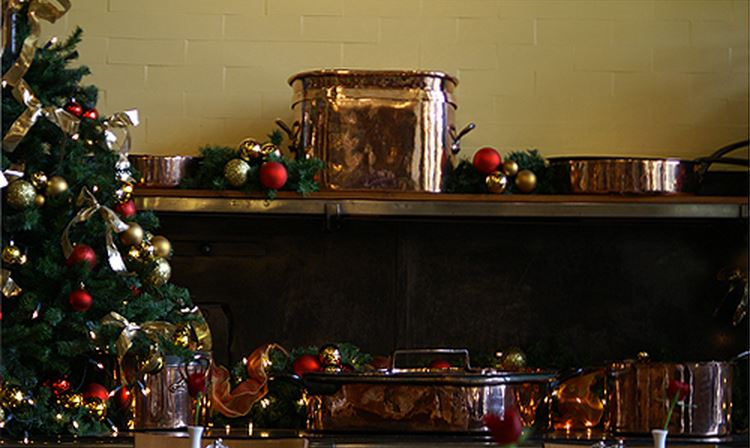
The old radio in the corner is constantly on at Christmas – it’s my loyal companion as I stand, stir & chop; slowly pottering round the kitchen, preparing the dinner. One by one, the joyous chorus of carols builds to a crescendo, and I lift my voice in cheery accompaniment to familiar favourites, old and new.

Behind this seeming harmony; the wireless and I have a grudging respect for each-other. Whenever I get too close, it lets out a wild crackle of protest, which grumblingly fades away as I hastily withdraw back to the table. The radio-set is like a much loved, but cantankerous old relative. The casing is timeworn, and the aerial long gone (it was replaced years ago by a bent and wobbly old coathanger). Since then, the tuning has never really worked properly and only four stations play-out reliably.

Despite the old radio’s protests, I could never get rid of it. It’s worked too long & too hard to simply abandon it the moment a little TLC is required. It simply needs patience and understanding. And besides; the rich music it emits would never quite sound the same from anything else. We’re used to each-other now, the radio and I. It’s a relationship that works, albeit haltingly at times…

But as I chop, stir and pare, I’m aware of other sounds which surround me. From all around comes the bustling hubbub of cookery at work – a rich kitchen carol that’s as joyous and full as the ringing chords of the radio itself.

Hark the herald angels sing… The kettle pipes up and joins in the chorus. It too sings along with its bright cheery whistle. Its voice soars high in descant to tell me the water’s boiled for teapot and stockpot. As I gently lift it from the hob, its song slowly fades as the carol’s last chords reverberate round the kitchen, then echo & die away.

The holly bears a berry, as red as any blood… Bright red cranberries pop and fizz in their gleaming copper-pan, slowly simmering on the hob. I reach into the large wicker vegetable-basket which lives under the table. Dry, papery onion-skins rustle like leaves as I rummage around, searching for ginger, thyme and sage. As I shred and slice cabbage, it crunches like footprints in fresh, pure white snow. The leg of lamb roasting in the oven spits and splutters; mushrooms squeak in the pan and bacon sizzles as it fries in hot butter.

When the glass of red-wine hits the hot pan; a huge steamy sigh billows up to the heavens. We’re walking in the air…  Each ingredient has its own special song. They all converge in unison; a fine, diverse choir of mysterious voices, high and low.

But it’s not just the ingredients which sing along to the Christmas chorus. Other sounds in the background join & accompany my soft hum.  As iron hits hotplate, it creaks, gasps & groans; cold metal expanding with sharp instant heat.

The copper saucepans on the hob bubble and chatter excitedly; each one anxious to get their own voice heard above the crowd, like schoolboys. Their bright copper lids clatter in clouds of steam, and water hisses as it boils over onto the stovetop. From a distance, they seem to gossip, huddled together in a simmering gaggle of whispers and pranks.

As I peel, grate and dice, my knife hits the board in rhythmic time to the music. The nutcracker cracks to the Sleighride song’s whip; pestle and mortar grind and scrape like a sledge over ice. With each strike of my whisk, the copper bowl rings out like a chime. Jingle Bells, Jingle Bells, Jingle All The Way blares the radio… Rolling-pins rumble and wine-bottles crunch into crushed ice. In the bleak midwinter… carols the choir.

I close my eyes and listen to the sounds of this kitchen carol.  Its unique, discordant chorus is music to my ears.

In this beloved, warm & familiar place; I smile and am happy. For it is home.

Thanks for reading and enjoy the run-up to Christmas,

Adam.

The Low Carb Christmas – Chocolate, Almond Roulade with Brandy Cream

WP_20141204_21_14_45_Pro

Christmas is a time of decadence and indulgence. Puddings lie at the very heart of this; so much so, that Christmas wouldn’t be Christmas without them! Desserts form an integral part of the seasons’ rich culinary heritage, and on a low-carb diet, things are no different.

Traditional ‘festive fare’ must be hearty and plentiful. In this dish, rich flavours such as brandy & cocoa combine with fresh cream & dense ground-almonds to create a taste that’s the ultimate in luxury. The roulade-sponge has a ‘moreishly’ chewy texture, which is complimented perfectly by the smoothness of the cream filling. In short, the whole thing is delicious from start to finish!

Because there’s no sugar or flour in this dish; diabetics, gluten-intolerants and ketogenic-dieters needn’t miss out on the fun. They’ll be no impact to your blood-sugar, and those trying to lose weight needn’t deliberate before helping themselves. The keto-diet is an amazing thing – it’s hard to believe you can eat this and still slim down. Well take my word for it – you can!

To make the roulade base, separate 4 eggs, reserving the yolks for a future low-carb custard or delicious omelette. Tip the whites into a clean mixing-bowl and whisk with an electric-whisk unto they form delicious snowy clouds. These should be stiff enough to retain their shape when you turn the bowl upside down over your head! If not, have a quick shower and start again.

Slowly sprinkle in 8oz of xylitol granulated sweetener, whisking at intervals to incorporate it into the egg whites. This will leave you with a mix that’s robust, but has an opaque glossiness. Into this, fold 2oz of ground almonds, 1 small teaspoon of white-wine vinegar, and 1.5oz of cocoa powder. Why the vinegar? This leads to a lighter meringue, as the acid slows down coagulation of the egg-protein. What does that mean? The meringue structure is improved & collapses less slowly. This means you get more time to whisk in the air, and the the egg-white ‘supports’ the other ingredients better due to its increased strength. It really does make a difference. Trust me!

With a spatula, scoop the mix into a lined baking tray and flatten roughly, making sure the meringue gets into all the corners to give you a perfect rectangle. Put this into a medium oven and bake for 30-35 minutes until the surface is slightly browned and feels ‘set’ to the touch. Remove from the oven and leave to cool thoroughly to room temperature. If it’s not sufficiently cool, your cream will everywhere and that would be a waste of all your efforts!

Meanwhile, pour approximately 200ml of double-cream into a mixing-bowl and add a good glug of brandy. Sprinkle in two tablespoons of powdered table-sweetener and whisk until the cream is firm and spreadable. If you like, you can add a little finely grated orange zest, but that’s entirely a matter of preference.

Measure a piece of tin foil to just bigger than your roulade, place this over the top and invert the tray onto the foil, with an impressive ‘flip’. This is not for the faint-hearted! Do it in one go with a a staunch fortitude. If you fuss over it, or try to turn the dish slowly, there’s far more chance it will break or you’ll drop it. So have courage and do it in one! If anyone in the house has a drum, suggest they perform a drum-role whilst your psyching yourself up. It may help (it may not…!). Either way, you should end up with a neat rectangle on your tinfoil. Slowly peel off the back lining and you’re ready to spread your cream filling.

With a palette-knife, scrape on your brandy-cream and smooth it evenly across the surface. Then taking the back edge by each corner; roll the roulade towards you, folding the meringue onto itself inch by inch. With each fold, it’s best to press the roulade down slightly so that it sticks to itself. Eventually, you’ll end up with a fine ‘cigar-style’ swiss-roll. If there are cracks, do not worry, we’re icing the top so a little texture along the way can only add to its character. Transfer this to your serving-plate and pause to look on with pride.

In the same bowl you used to whip up your brandy cream, pour a further 100ml of double-cream into your bowl and add a tablespoon of powdered sweetener. Measure in the same quantity of cocoa-powder and whisk the lot, until you have a nice firm frosting. Spread this with your palette-knife across the top of the roulade, then sprinkle the top with flaked almonds and generous curls of orange zest.

In place of icing-sugar, a light dusting of powdered sweetener will add the final touch of festive cheer and magnificence. Voila – your roulade is ready for the table.

This dish is every bit as delicious as it looks. You’d never know it’s low carb! Be sure to keep reading for more festive recipes over the coming weeks! Check out The Low Carb Christmas for details.

Enjoy the festive season and thank you for reading,

Adam.

The Low Carb Christmas – Wine Poached Fillet of Salmon & Prawns in a Classic Hollandaise Sauce

WP_20141203_20_21_12_Pro

Christmas is a time of perfection. From the baubles hung lovingly on the tree, to that one ‘ ideal’ present you’ve agonised over for weeks; it’s a time when we should aspire to the best in all we do. And for me, that aspiration begins in the kitchen.

For a few precious days, we finally have the time to cook old favourites & prepare things which are just that little bit special.  And what could be more special than classic poached salmon with hollandaise sauce?

Hollandaise is a thing which many people fear; but in actual fact, it’s really rather simple. The key is to understand what you’re doing, so you’re aware why & how things could go wrong. Once this is clear, so many of the classically ‘fiddly’ things we tend to avoid suddenly become easy. You’ll wonder what all the fuss was about, and achieve flawless results every time.

Hollandaise is also a ketogenic dream – a rich, velvety-smooth sauce consisting largely of melted butter and egg yolks. There’s precious little carbohydrate here, so diabetics, paleo-followers and gluten-intolerants can equally share in the luxury without fear of impact to blood-sugar.

There’s a saying that a bad workman always blames his tools. Well in the case of hollandaise, this is not quite strictly true. If your cooker has poor temperature control, or your pan is thin with ‘hotspots’ on the base; you’ll struggle with this. Why? The trick is a slow heat, where the sauce thickens evenly throughout. So many failures can be attributed to inadequate equipment – in this instance they’re in no way a reflection on the cook!

So what is it we’re doing when we make hollandaise…? I’m assuming you’ve made scrambled eggs before. The mixture starts runny, then the eggs solidify and form lumps as they cook. This is exactly the process that will lead to a lumpy ‘separated’ hollandaise. We don’t want the sauce to reach a temperature where the eggs go solid. Instead, we want the low heat to merely thicken the egg yolks so that the sauce is rich and velvety, like custard. The pan should never reach the point where you can no longer touch the outside because it’s to hot. Abide by that teaching and you’ll never go wrong!

My recipe for this is uncomplicated and simple to follow. There’s no need for bain-maries or several different saucepans. Just the one will do . I aim to keep things as ‘pared down’ as possible. There’s enough washing-up at this time of year without adding to it unnecessarily.

Start by separating 3 eggs and placing the yolks into a small, heavy bottomed saucepan. I use copper because of the heat-conductivity, but anything of quality will suffice. Add white-wine vinegar to the yolks; my guide as to quantity is visual. You want the same volume of vinegar by eye as the size of one of your egg-yolks. Whisk this together and grind in pepper and a pinch of salt.

On the cooker’s lowest heat, warm the mix through, whisking slowly the whole time. Stick your little finger into the pan, if it feels around body-temperature, you’re there. Weigh out 4oz of salted butter (the butter must be at room-temperature!) and break this into little chunks into the pan, whisking as you go. At this point it will resemble a nightmare of yellow lumps in a slightly unattractive yellow foamy liquid. Do not worry; the butter will melt in nicely. Squeeze in a teaspoon of lemon-juice and place the pan back onto the hob, still at lowest heat.

Whisk the contents continually. You don’t want the mix to turn to scrambled eggs. This will happen if any of the mix catches on the bottom of the pan or the heat is too high. Remember the ‘outside of the pan rule’. As the butter slowly melts, the sauce will become smooth. You’re now at the point where it will gradually begin to thicken. Keep the pan on the hob and whisk until you have the texture of custard. If it doesn’t thicken after two minutes, turn the heat up very slightly – you’ll get there in the end. It is just a matter of patience. The sauce should end up a creamy yellow, on account of the egg-yolks. It will be glossy with a fine shine. Once achieved, you have every right to feel incredibly proud of yourself! Lift the pan off the heat and leave at room-temperature, whisking occasionally.

Now for your salmon. Whenever you’re poaching something delicate like fish, it’s best to place a sheet of silicone or tin-foil in the pan to serve as a ‘cradle’. This means you can lift the contents straight out, without needing a fish-slice or palette-knife to ‘scoop it up’. The latter method risks breakage, which is unsightly and unnecessary. You want your sheeting to stick out a good couple of inches either side of your pan, to form two handles.

Place the pan on the hob and pour in a small glass full of white wine or vermouth. Add some water, so that you have half a centimetre’s depth. Grind in some pepper and drop in a bay-leaf. As the liquid comes to the simmer, lower in your fish, then place the lid on the pan for 3 minutes.

After this time, lift off the lid to check on progress. If it looks nearly cooked-through, tumble in your prawns and replace the lid for two minutes. Remove from the heat and let the prawns heat up in the remaining steam.

Lift your fish from the pan, using your tinfoil handles. Do this at a slight angle, so that the liquid drains back into the pan. Transfer the salmon to a pre-warmed serving-platter, either by rolling it off the foil, or lifting carefully with a fish-slice. I prefer the rolling method; you have more control.

Spoon your hollandaise liberally over the fish and garnish with fresh salad leaves, a slice of lemon and the chopped herb of your choice. I used basil because I love the stuff!

Voila – your dish is ready! Transfer to the table and dig in whilst still warm. A perfect festive dish, that’s as fine and elegant as the occasion deserves!

Be sure to keep reading for more festive recipes over the coming weeks! Check out The Low Carb Christmas for details.

Enjoy the festive season and thank you for reading,

Adam.

A silent and stately waltz…

sun

This morning, the sun hangs like a giant, splendid ball of fire against a cloudless blue sky. Despite its best efforts, there’s none of a fire’s comforting warmth. The air is crisp and clear, with a cutting bite, that warns all to dress up warmly.

I’m not alone on my dawn walk today. Six fallow deer are feasting on the rich green carpet of winter barley that’s pushing up valiantly through the icy ground. As they sense me coming, they sail away, like carousel horses, gracefully rising and falling to the stately cadences of some silent waltz only they can hear.

Theirs’ is an elusive beauty; as timid and shy as the creatures themselves. And so free! So effortlessly free! I often think they must mock my ungainly stomping, as I march round the field, clad in thick jumper, scarf and Wellingtons.

As they glide off into the distance, I wonder if they too are in awe of the natural beauty which surrounds them… I’m sure they must be. For it is their world, I’m simply an intruder, just passing through. There one minute, gone the next.

Whatever you get up to, be sure to venture outside and enjoy the day. For it is perfect.

Thanks for reading,

Adam.

Week 9 – Sun 30th November

Well, I’m nine weeks in now. Just to remind you all, I started the ketogenic diet at 15 stone, 10 pounds. My goal is 12 and a half stone, by mid-March 2015. This means a target weight-loss of 2lb per week.

Week Nine’s target-weight therefore? 14 stone, 6 pounds. It’s also the second of my once monthly ‘waistline measurements’ today, which is always nerve-racking!

When I started the diet, my waist-circumference was 45 inches. All the the health-literature states that if your waist is above 40 inches, then you enter the danger-zone for developing coronary heart disease, high blood pressure and diabetes. This is something I am keen to avoid; plus I hate the ‘pot-bellied’ look, which was starting to creep in. On the health front, my partner is a type 1 diabetic; so if I developed type 2 through poor lifestyle choices, then that would be a slap in the face to both him and me!

The tape-measure Is a different kettle of fish entirely from the weighing-scales!  With regards weight, there’s no ‘negotiation’ in the process. The scales say what they say, there’s no getting out of it! The tape-measure is a little more open to interpretation. A series of questions present themselves – have I measured at exactly the same point as last time…? Is the tape completely level…? Am I breathing in too much; or have I pushed my stomach out artificially to capture the ‘worst case scenario’…? It is an exercise in frank self-honesty, which is never easy.

And so I stand in front of the mirror & ask myself all the above questions. I look down at the tape, ‘hum & ha’ a little, then take the average of about 10 measurements – 43 inches definitely! I’ve lost two inches from the circumference of my waistline, which is fantastic! Just three more to go before I’m out of the danger zone.

This ‘waist-shrinkage’ also accounts for the fact that everyone’s saying ‘I’ve lost a lot of weight’. My trousers are sitting far more comfortably, and a belt-notch has gone down (I love when that happens).

So with regards the actual pounds and ounces, how have I fared? I step tentatively onto the scales…

14 stone, 10 pounds. Another pound off! The downward trend is continuing and this week’s reading presents a 1lb weight-loss from last week. I may be 4lb behind target, but that really doesn’t bother me. I’m losing weight and that’s all that counts. I’m now a full stone lighter than I was nine weeks ago. The one-stone milestone has been crossed!!!

I’ve already accepted that this will all take longer than I’d first estimated. Weight-loss clearly slows down the older you get. In my twenties, just cutting out bread for a week would shift a couple of pounds. Nowadays, the body seems reluctant to slim down and takes it one slow step at a time…

A lot of people have said to me that the body can only tolerate a 1-2 loss per week. These figures would support that statement, which is positive. The ketostix are still showing a dark purple a lot of the time, so I can be sure that the weight-loss is body-fat; not just water!

Am I experiencing diet-fatigue? Not at all. The ketogenic-diet is incredibly easy to follow. The food is delicious and varied, so much so that this in no way feels like a diet! The plan is to eat liberally from the ketogenic ‘food pool’ and not worry about portion-size or cutting things out. That’s certainly what I’m doing, and I’m still losing weight.

In summary, I’m feeling incredibly motivated and wouldn’t go back to old my old ‘carb-ridden’ ways for all the tea in China! My one big challenge will be an impending holiday.

I’m off to Germany to visit the Christmas Markets in 10 days, and that will be hard. Germany is the land of beer & carb-laden foods, so I anticipate I may waiver a little and partake in some mulled-wine and wonderful German beer! Until then however, my resolve is firm!

Please do ‘look in’ on me next week to see if I make further progress towards my targets. I find it really positive to have people read this – the support is a massive encouragement!

Thanks again for reading, and have a great week,

Adam.

The Low Carb Christmas – Red Onion, Asparagus, Parmesan & Cream Cheese ‘Parma-Ham Tartlets’ with Truffle-Dressed Leaves. A festive Christmas starter that tastes every bit as good as it looks!

WP_20141202_21_18_00_Pro

Christmas is a time of joy and plenty. Of nowhere is this more true than the festive table. In this wonderful season, food comes into its own and proudly takes centre stage. And behind every stage must lie a theatre; in this instance, that theatre is the kitchen – the true heart of every home.

With its gleaming copper pans and lovingly scrubbed oaken-table, the kitchen becomes a place of unrivalled magic at Christmas. There are so many delicious things to prepare that the cook is spoilt for choice; so much so, that selecting the perfect dish becomes more of a challenge than cooking it!

When I began the ketogenic-diet, I was slightly concerned that my kitchen would lose its magic. There’d be no more rolling of pastry or slow rising of bread. But instead of narrowing my repertoire, the low carb diet has expanded my horizons and pushed me to try new things. That must be a benefit!

With a little imagination, the low carb kitchen can yield a stunning diversity. Take these tartlets for example. They require none of the fiddly mess of pastry, nor induce the ‘bloat’ it brings on. They’re perfect for diabetics or those with a gluten-intolerance; not to mention those on a low-carb ‘keto-plan’ (like me!).

Such dishes may look complicated, but it doesn’t follow that their preparation should be either arduous or stressful. This recipe is incredibly simple & is perfect for a Christmas starter or light brunch. It can be made ahead of time and assembled at the last moment; a real boon on Christmas day, when time has a habit of running away with itself!

The first thing to tackle is the parma-ham tart-cases. Lightly oil a muffin tray or Yorkshire-Pudding tin. Cut your parma ham into lengths which just sit proud of the surface. This allows for shrinkage. Two slices per tartlet should be sufficient. You can use the trimmings to plug any gaps you have, to create a seamless shell. Into a hot oven they go for 10 minutes max. You want the sides to be ever so slightly brown, but not too crisp. Once done, take out of the oven and leave to cool.

Meanwhile, slice your asparagus spears into very thin rounds. Boil these for one minute in a shallow pan of water. I added half a stock-cube to this, plus a small ‘crush’ of garlic to provide background flavour. After the time has elapsed. strain the liquid and refresh your asparagus under the cold-tap to arrest the cooking process.

Finely chop a red onion and sauté in butter until soft and translucent. Then remove from the pan, and lay thinly on a plate to cool. The trick is as follows: the greater the surface-area of your plate, the quicker the cooling time!

Grate a little parmesan cheese into a mixing-bowl and sprinkle a generous spoonful of chopped basil on top. Once your asparagus and onion are at room-temperature, add these to the bowl and season well. Stir in an equal quantity of cream-cheese by eye and loosen the mix with a quick pour of double-cream and squeeze of lemon-juice. The texture we’re looking for like a mousse. If it’s too solid, ad a little more cream.

Taste the mix to adjust for seasoning, then spoon into your cooled tart-cases, piling the mix up in a generous mound. This is no time to scrimp! Top the tartlets with a thin slice of tomato & lemon-zest, then garnish the dish with fresh salad-leaves.

Though in no way essential, a drizzle of truffle-oil finishes the lot to perfection! Don’t worry if you can’t get hold of this – a good vinaigrette will serve just as well. Either way, the results will be flawless!

Be sure to keep reading for more festive dishes over the coming weeks! Check out The Low Carb Christmas for details.

Enjoy the festive season and thank you for reading.

Bon ap!

Adam.

Week 8 – Sun 23rd November

Well, I’m eight weeks in now. Just to remind you all, I started the ketogenic diet at 15 stone, 10 pounds. My goal is 12 and a half stone, by mid-March 2015. This means a target weight-loss of 2lb per week.

Week Eight’s target-weight therefore? 14 stone, 8 pounds. Waistline measurement only once a month, so not this week.

If you ever have the bright idea to start a blog and publish your weight to the world; there’s no being precious about the results. Whether the outcome is good or bad, I’m committed to recording my progress as honestly as I can. Although I must admit, this isn’t easy.

I’m beginning to accept that this may take a lot longer than I’d first thought. My initial estimation of timescales was based on how easily weight fell off in my twenties. Things seem to be slowing down a lot now…

As long as the trend is downwards, I don’t mind how long it takes. I’ll get there in the end! And so, I step nervously onto the scales…

14 stone, 11 pounds. Thank goodness. The upward trend has stopped! A 1lb weight-loss from the week before is a definite sign that the plan is working; albeit slowly! I’m behind target by 3lb, but that really doesn’t bother me. I’m losing weight and that’s the main thing. I’m now 13 pounds lighter than I was eight weeks ago, so that’s definitely worth celebrating.

As I said last week; the great thing is that the regime is still incredibly easy to follow. I can honestly say this is no way feels like a diet! Could I restrict my food intake a little more and cut out puddings to speed things up? Yes, I’m sure I could. But I’m keen that this doesn’t become one of those exercises in punishment that standard diets have always been.

The plan is to eat liberally from the ketogenic ‘food pool’ and not worry about portion-size or cutting things out. This is certainly what I’m doing, and I’m still losing weight.

Portion-size is certainly not a problem. The fat-intake of LCHF means that you feel full and have no desire to pick. This is a huge difference to every diet I’ve ever done – always before I was feeling the need to reach for food every ten minutes. That is no longer the case and I could happily miss a meal without noticing. The volume of food I’m eating has radically reduced, and with it, a pleasing ‘stomach-shrinkage’, which means that the bulge sticks out less (I love that!). It must also mean that my blood-sugars are completely stable and under control.

All is good therefore. Several people have told me over the last few days “my, you’ve lost a lot of weight!” This is naturally music to the dieter’s ears and more than makes up for any concerns as to progress or the fickle nature of the scales. Speed is therefore of no consequence. It took me quite some time to get this fat; it will take an equal length of time to lose it again!

Food is still a joy, and I’m in no way tiring of the perceived ‘restrictions’. In actual fact, it’s quite the opposite! Sugary cakes and sweets suddenly look completely unnatural and the site of them really puts me off. They’re now the last thing I want to eat, which I find really positive.

And physically? Any changes to how I’m feeling?

No, still feeling in great shape! Any side-effects of the ‘big switch to ketosis’ are long gone. If you asked me to go back to my precious way of eating, the answer would be a definite NO!

Am I missing anything at all? In all honesty, the only thing is beer. Country pubs at the week-end look so appealing, but I know I’d be annoyed with myself for cheating. I’m off to Germany on holiday to visit the Christmas Markets in a few weeks, so I may indulge myself then, but certainly not at present!

Please do ‘look in’ on me next week to see if I make further progress towards my targets. I find it really positive to have people read this – the support is a massive encouragement!

Thanks again for reading, and have a great week,

Adam.

The Low Carb Christmas – Traditional Christmas Dinner with All the Trimmings! Roasted poussin, celeriac, ‘pigs in blankets’, stuffing & gravy. A festive masterpiece!

Christmas Dinner

Few things can be more splendid than the sight of the festive table, groaning with a traditional Christmas dinner and all its trimmings. Whilst the classic roast turkey is a firm favourite, Christmas day itself is always a frantically busy time. Relatives are visited, friends drop by and there’s generally a thousand and one things to do around the house. This makes the four-hour roasting-time of a whole turkey more than a little problematic and stressful!

To combat this, a wonderful alternative is roasted poussin. Not only does this offer sublime results in a fraction of the time; there’s also a feeling of utter decadence when guests are presented with a whole Christmas bird all of their very own! There’s something innately cheering about a festive platter stacked to the gunnels with individually roasted fowl. It’s a sight that’s as mouth-watering as it is delicious.

When you cook this, you’ll find it hard to believe that this dish is low carb. It’s every bit as hearty and satisfying as its starch-laden counterpart, but offers none of the bloat, soaring blood sugars or feeling of being as stuffed as the very bird itself! Unlike traditional Christmas dinners of old, you may even find yourself ready and raring to tackle a low carb pudding or two (watch this space). As such, this delicious variant is absolutely perfect for diabetics, those on a ketogenic diet and paleo fans alike. It’s also gluten free, so those with an intolerance to wheat can enjoy this as much as the rest of us.

Beyond mere nutrition however, this dish is everything a Christmas Dinner ought to be! Nothing is missed out or compromised; it’s wholly true to the classic. This will come as a relief, as working out what to cook at Christmas can be hard on a low-carb diet. This solves all the problems in one fell swoop!

Start with the Stuffing. Finely chop an onion, one courgette, and a handful of sage. Add these to a large mixing bowl then stir in 2 handfuls of roughly diced mushrooms, the same volume of bite-size chunks of sausage-meat (or sliced sausage) and circa 400g of ground almonds. If you fancy it, you can add the grated zest of half an orange and a small pinch of nutmeg. These lend the dish a festive freshness and give the whole kitchen that delicious Christmassy aroma as they cook. Season the mix really well and stir in some dried sage in addition to fresh. Beat three eggs and mix these in, so that you have a texture which clumps and sticks together with a pleasing denseness.

Butter a baking-dish, then spread your mixture to minimum one centimetre in depth. Generously spot the top with knobs of salted butter, then bake for 1 hour, until brown and crunchy on top, and wonderfully aromatic!

Next, move on to your celeriac. Peel ‘the big ugly’ and dice into 1.5 inch chunks. Bring to the boil in a pan of water, then strain, and tip into a roasting-pan. On the hob (or in the microwave) heat goose fat until good and hot. You’ll know when it’s done if a droplet of water ‘spacks’ when added. There’s no obligation to use goose-fat; sunflower oil will do as an alternative, but nothing quite rivals the rich taste, or provides an equal degree of richness. Ladle your fat over the celeriac, then sprinkle on a liberal pinch of seas-salt. I like to follow this with a good grind of black pepper and a light dusting of dried herbs. Into the oven they go for an hour until crisp and brown.

Roughly quarter two large onions and arrange these in the bottom of a second roasting-dish. Place your pousssin breast side down atop the onion and liberally season the skin. Why upside down? The fat will soak into the breast and mean that the meat is succulent and tender. Sprinkle with dried sage, then into the oven it goes alongside the celeriac. After half an hour (or once the underside has browned), turn the birds the right way over and season the breast-skin. A few more dried herbs will give the top a fine speckle add to the aroma. Place the dish back into the oven and cook for a further 20 minutes, to brown on top.

Once golden, remove the poussin from the oven and pour the meat-juices into a separate saucepan. Cover the birds with a thick coating of tin-foil to allow the meat to rest.

Just before you turn the poultry, prepare your ‘pigs in blankets’. You have a choice here. You can use chipolatas, sausage-meat balls or cut the sausage-meat into rondelles. I chose the latter for speed and convenience. Wrap the sausage-meat in smoked streaky-bacon then season. Place these onto a baking-sheet and roast for 30-40 minutes until brown and succulent.

Meanwhile, make your gravy. Place the saucepan with your meat juices onto the hob, then add a tiny splash of vermouth, white-wine or sherry. Top up with an inch of hot water, crumble in a chicken stock-cube, then simmer for ten minutes on a low heat. Just prior to service, swirl a good glug of double-cream into the pan and taste to adjust the seasoning.

Finally cook your vegetables. Here I chose baby leeks, sprouting broccoli, mange-tout and baby-corn. Surprisingly enough, young corn-cobs are reasonably low carb. As they get older, they gain in sugar and starch, so mature corn-on-the-cob is best avoided. Steam these in a shallow pan of water, ensuring that the water goes no higher than ‘waist-height’ on the vegetables. Once tender but still retaining their bite; strain and place back into the pan with the lid on to keep them hot. A knob of butter can also be added for richness, but that’s entirely up to you!

All should now be in readiness. Transfer your rested meat onto a warmed serving-platter then pile your roasted celeriac to one side. You can keep the stuffing in its own dish, or spoon around the poussin if you prefer. Place the sausage-meat ‘pigs in blankets’ around the dish, then tumble on your vegetables. Finally ladle a little gravy all around, retaining the rest in a warmed sauce-boat to serve at table.

Your Christmas feast is ready! Carry the serving-platter to your hungry diners and let everyone dig in. They certainly won’t be disappointed!

Be sure to keep reading for more festive dishes over the coming weeks! Check out The Low Carb Christmas for details.

Enjoy the festive season and thank you for reading.

Bon ap!

Adam.

The Low Carb Christmas – Beautiful Low Carbohydrate Recipes to Celebrate the Festive Season!

hall

Heap on more wood! the wind is chill;
But let it whistle as it will,
We’ll keep our Christmas merry still.
Each age has deem’d the new-born year
The fittest time for festal cheer:

Christmas is truly a time of unrivalled joy. As the days count down, the home is slowly transformed into a place of magic and wonder. Once familiar rooms suddenly spring to life, as garlands of bright green holly & ivy are brought in to ‘deck the halls’ with festive cheer. The delicate glass-baubles, hung so lovingly on the Christmas Tree; softly reflect the glow of a roaring fire and the light of a myriad dancing candle-flames.

As presents are wrapped and cards written; the kitchen too makes ready, and sings its own unique carol of joy. Pan lids clatter and best china is scrubbed; a busy hubub of merriment against a backdrop of fragrant spices & delicious roasting meats. For it is in the kitchen that magic occurs. The well-stocked larder seems boundless in its plenty, and mealtimes, so often rushed; become a ritual symbol of merriment and togetherness.

I absolutely love Christmas. It’s without doubt my favourite time of year. To honour this, I’ve devoted December’s recipes to a selection of festive dishes which will proudly grace the Christmas table. There’s a whole host of delicious low-carb food which is there to be enjoyed. And I hope you’ll enjoy it with me!

For the next couple of weeks, Country Walks in Ketosis offers The Low Carb Christmas. Starting first of all with a delicious take on the classic Christmas dinner.

I hope your run-up to Christmas is a happy one.

Thank you for reading and bon ap!

Adam.

xmas

Griddled Lamb Steaks with Creamy Mushroom, Pepper & Courgette Stroganov – Low Carb Dishes Don’t Get Any Better Than This!

lamb stroganov

This was the nicest meal I’ve had in a long time. I can’t therefore praise it enough! There’s something about stroganov that innately speaks ‘comfort-food’. It’s creamy, rich and filling; but has just the right amount of kick due to the heat of paprika. This makes it the perfect thing for a chilly winter’s evening.

Lamb is also a firm favourite. If you’re going to pair meat with something like stroganov; the meat needs sufficient flavour to hold its own against the sauce. Beef or lamb is therefore ideal, whereas something like chicken would risk getting lost. The cut I chose was lamb leg-steaks. These are quick to cook and remain tender, despite their relatively short time in the pan.

Once you’ve tried this, you’ll understand why I like it. The whole thing is ready in 30-40 minutes, and it doesn’t require ‘standing over’ or mothering whilst it cooks. Beyond all else however, it is supremely delicious. Due to the very low carb-content, this recipe is suitable for diabetics and gluten-intolerants. If you’re on a paleo-diet it is also ideal. In fact, I recommend it to everybody!

Start by making your stroganov. Finely slice a large onion and soften this in a sauté-pan with a little butter and oil. Adding oil to the butter stops the latter from burning. Burnt butter is not only careless, it’s also shameful and a wasteful tragedy! There; you’ve been told – don’t let it burn!

Roughly chop peppers and courgette and add these to the pan, followed by whole mushrooms. If these are on the large side, simply cut them down the middle. This dish requires chunks however, so not too small. Crush in two cloves of garlic, add a chopped chilli and sprinkle on two teaspoons of paprika.

Leave to cook for a minute or so, then deglaze the pan. I like to do this first with a small quantity of vodka, then follow it by a little dry vermouth for sweetness. An inquisitive nose held over the pan will be rewarded with a powerful waft of fragrantly alcoholic steam. A cook must get their perks somehow…!

Once the liquid has reduced, pour on a cupful of water and crumble in a chicken stock cube. Simmer for 20 minutes, then swirl in generous glug of cream. Taste the sauce to check for seasoning and adjust if required.

Meanwhile place a griddle-pan or thick-bottomed skillet on the hob. Once this is really hot, season your lamb steaks and coat with a small quantity of oil. Then lower these into the pan, enjoying the playful sizzle as they hit the dry metal. Few things can be more mouth-watering than the scent of seared lamb. Be sure to enjoy it for the full six minutes; three minutes on each side to retain an element of the medium rare!

Spoon your stroganov onto a heated serving-dish, then lift your lamb out of the skillet and place next to your vegetables. Garnish the finished dish with a a sprinkle of chopped basil or parsley then rush to the table whilst the lamb is still sizzling.

There’s only one word for this… Divinely delicious! Okay, so that was two, but one didn’t quite seem to do it justice!

However many words you end up using, be sure to give this a go and let me know the results.

Thanks for reading and bon ap!

Adam.

Low Carb Lunch! Emmental, Ham & Avocado Salad in a Rich Pesto Dressing. Sublime!

ham avocado salad

Salads are always a perfect luncheon dish, or equally a great starter to a main course. They’re ready in minutes and are packed full of nutrition. They also contribute to your ‘5 a day’; which is always welcome.

The key to a good salad is the dressing. Things like vinaigrette or Caesar-dressing are delicious, but they can be time consuming. To remedy this, I thought I’d share with you the world’s easiest ‘quick fix’ recipe – pesto dressing! I use it when I’m pushed for time, or have run out of more complex ingredients for other things. Or equally, just whenever I fancy it –  it tastes wonderful!

Making this couldn’t be simpler. Put a large dessert-spoonful of jarred pesto into a small mixing-bowl.  Slowly stir in olive oil with a spoon until the mixture is sufficiently runny to ‘drizzle’ off the lifted spoon. If it falls in clumps, you need more oil. Hey presto! That’s it. It makes a perfect accompaniment to so many salads, fish, cooked-meats, chicken, cheese… the choice is endless.

For this particular dish I’ve chosen smoked ham, Emmental & avocado, which is a delicious combination. Spread your salad leaves in the bottom of a large bowl and sprinkle over a generous helping of finely sliced ham. De-stone your avocado and arrange this is the centre, then shave over a good quantity of parmesan. Avocado always needs something salty, so any hard Italian cheese is the perfect thing to pair it with.

To provide a little substance and texture, I’ve also added diced Emmental. Emmental is one of those cheeses with a dense, resistant ‘bite’ and mild nutty taste. It’s great for salads because it’s easy to chop (unlike crumbly or soft cheeses) and it doesn’t war with the other flavours. A salad that tastes of only one thing, must be considered a disappointment in the extreme and reflects a poor choice of ingredients.

Strew your diced cheese all around, then spoon over your dressing. To compliment the pesto, scatter over finely chopped basil and season with salt and pepper to finish. I’ve also added sliced scotch-bonnet chillies to give things a kick! But these are entirely a matter of preference, and can be omitted if they’re not your thing!

All that remains is to get stuck in! So don’t delay.

Thanks for reading and bon ap!

Adam.

Spinach, Asparagus, Serrano Ham & Goat’s Cheese with Tangy French Vinaigrette – a delicious low carb salad that’s ready in minutes!

asparagus goat's cheese salad

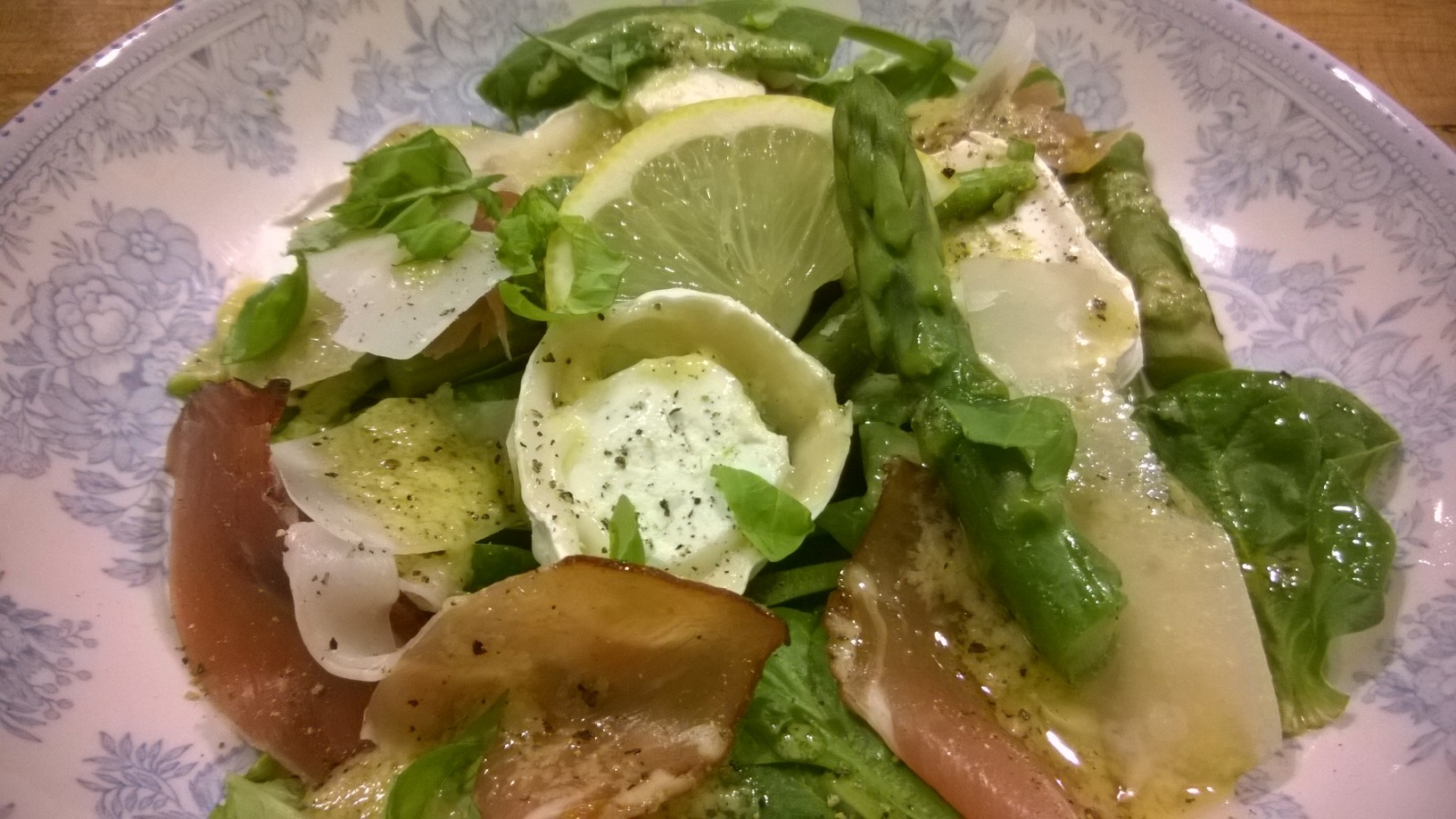
Asparagus is one of my favourite things. Good job it’s low carb! Here I’ve teamed it with smoky Serrano ham, baby spinach leaves and classic French vinaigrette.

This delicious combination is ready in three minutes flat and is incredibly straightforward; more a matter of assembly than anything else!

With regards the Serrano ham; this dry-cured ‘mountain ham’ from Spain can equally be replaced with Italian Parma-, or German Black-Forest ham. All are equally delicious, so if you can’t decide on taste, let availability be your guide.

Bring a shallow pan of water to the boil and blanche your asparagus for two minutes, until soft but retaining bite. Then plunge the cooked spears into cold water so they keep their vibrant green.

Place your spinach into the base of your salad-bowl, then arrange your asparagus on top. Layer on slices of the cured Serrano ham, then position your rondelles of goat’s cheese. You can equally cut the cheese into rustic chunks if you prefer – the choice is all yours!

Finely shave a little parmesan over the top, followed by roughly chopped basil leaves. Finally, spoon your vinaigrette at intervals over the salad, then finish with a good grind of pepper.

Low carb doesn’t get any easier or faster than this!

Thanks for reading and bon ap!

Adam.

Creamy Goan Lamb Curry with Coconut, Mushrooms & Rainbow Peppers – aromatic, delicious and low in carbs!

WP_20141128_21_46_29_Pro (1)

Goan curry is very much the unsung hero of the spice-world. Its true beauty lies in the fact that it’s aromatic and mildly spiced; completely lacking the often intensive ‘chilli kick’ of its hotter Indian counterparts. The habitual use of coconut milk adds a rich creaminess, which perfectly complements the mellow flavour and adds just the right touch of sweetness.

Beyond its exquisite flavour, Goan curry has another string to its ample bow – it’s a true joy to cook and is incredibly simple & straightforward. Don’t get me wrong; I love the intricate grinding, blending and mixing of a good home-made curry, but sometimes you just want something easy. This dish is certainly that; yet tastes anything but! There are no pastes to make, or spices to roast and grind. The whole thing can be made from store-cupboard staples and is powder-based; so a spoon is all you need to measure out the ingredients and create the flavour.

This dish works equally well with fish, chicken or vegetables; indeed chicken and fish are the Goan staples. Here however, I’ve chosen to use minced lamb on account of its deep, rich, succulence. The smell which fills the kitchen when you cook with lamb is mouthwatering beyond compare. Add to this the perfumed, exotic scent of ground spices and you’ll want to cook this time and time again!

Start with the marinade. Measure the following into a large mixing-bowl: 1 1/2 tablespoons of ground coriander, 1 teaspoon of ground cumin, 1 teaspoon of paprrika, 1/2 a teaspoon of turmeric, 1 teaspoon of chilli powder, a tablespoon of lemon juice, 3 tablespoons of water and a generous pinch of salt. Mix all together, then add your lamb-mince, or whichever meat you choose to use. Amalgamate well and leave to infuse in flavour for at least half an hour.

Meanwhile, prepare your vegetables. Finely slice a large onion and crush two cloves of garlic. De-seed half a red pepper, yellow pepper and green pepper, then chop these into bite-size chunks. Roughly slice a couple of handfuls of mushrooms and set all aside in a bowl. Any spare vegetables that need using can also go in. I had some mange-tout which needed a home, so in they went!

After half an hour, heat a little oil in a heavy pan on the hob and spoon in your marinated meat. The smell should be divine! Sear and brown the lamb until pleasingly coloured, then add your vegetables and stir through. Leave these to cook for ten minutes until soft, then crank up the heat and add in a can of coconut milk, mixed with an inch of water. Crumble in a chicken stock cube for background depth, then spoon in a dollop of dijon mustard (a good teaspoonful!).

Leave to simmer on a low heat until the sauce is thick and glossy, circa 20 minutes. Once done, sprinkle over a generous handful of chopped basil and take to the table.

I have a confession to make here. I was going to serve this with some cauliflower-rice that I had pre-cooked in the fridge. Somebody (who will remain nameless) found this however, and polished off the lot for lunch whilst I was at work! I think I’ll need to install a lock on the fridge-door, to save my carefully planned meals from scavenging, peckish diabetics! My backup plan was a quick sauté of courgette-noodles. Equally delicious, if slightly less classical…!

Whatever you end up serving this with, I hope you enjoy it as much as we did.

Thanks for reading and bon ap!

Adam.